Venetian Plaster Vancouver : “The Process, The Projects”


September 17th, 2012

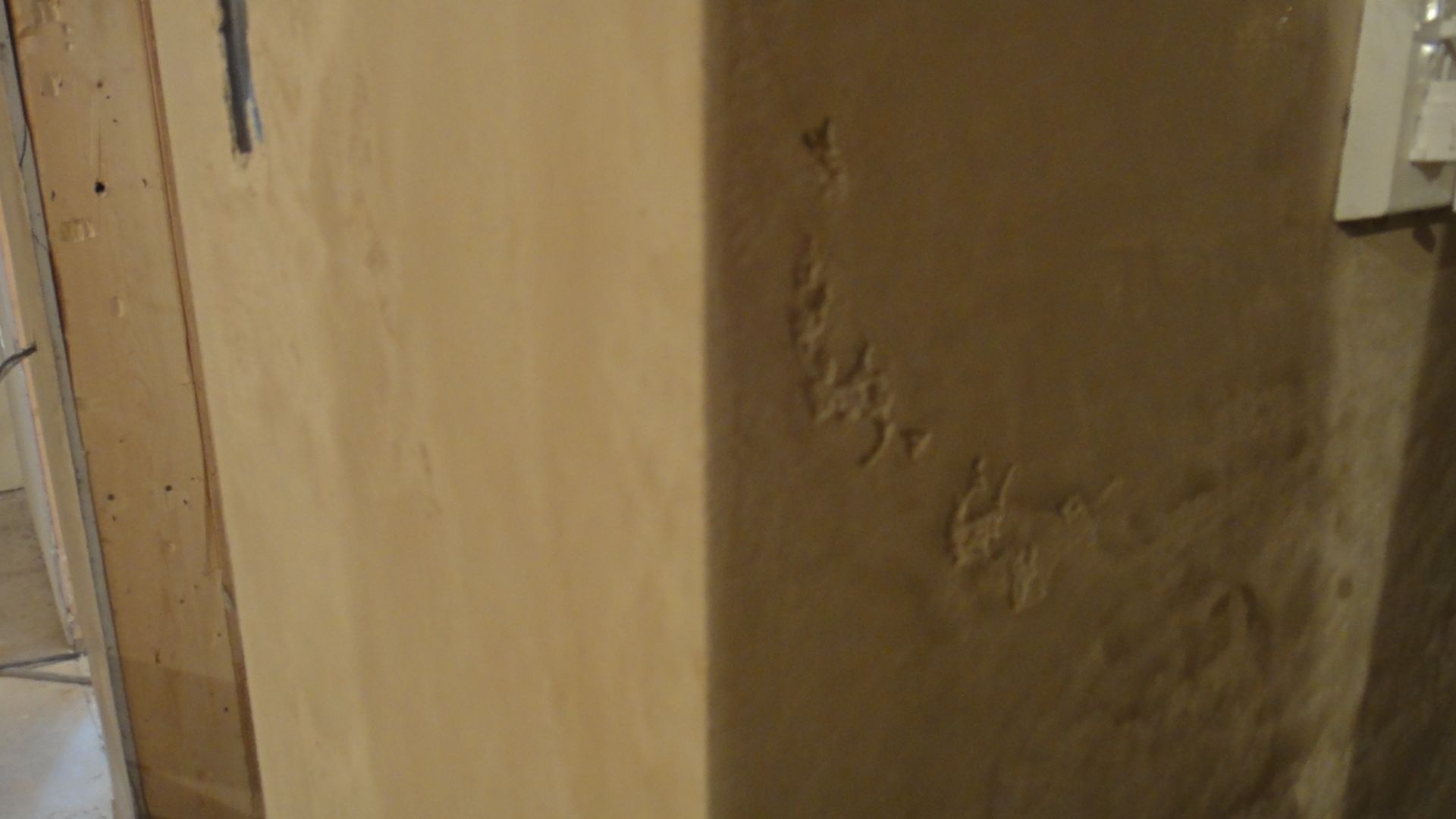
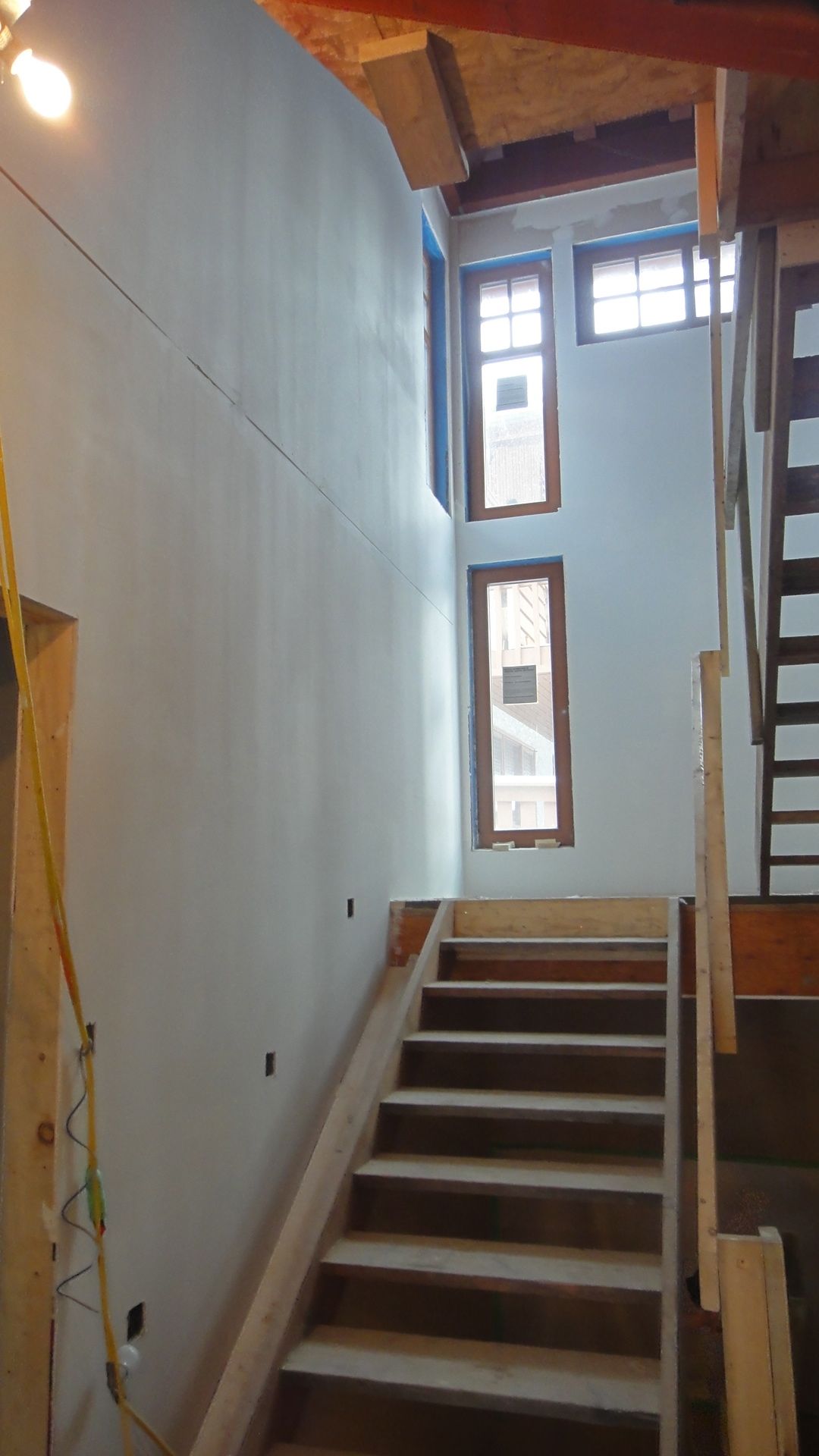
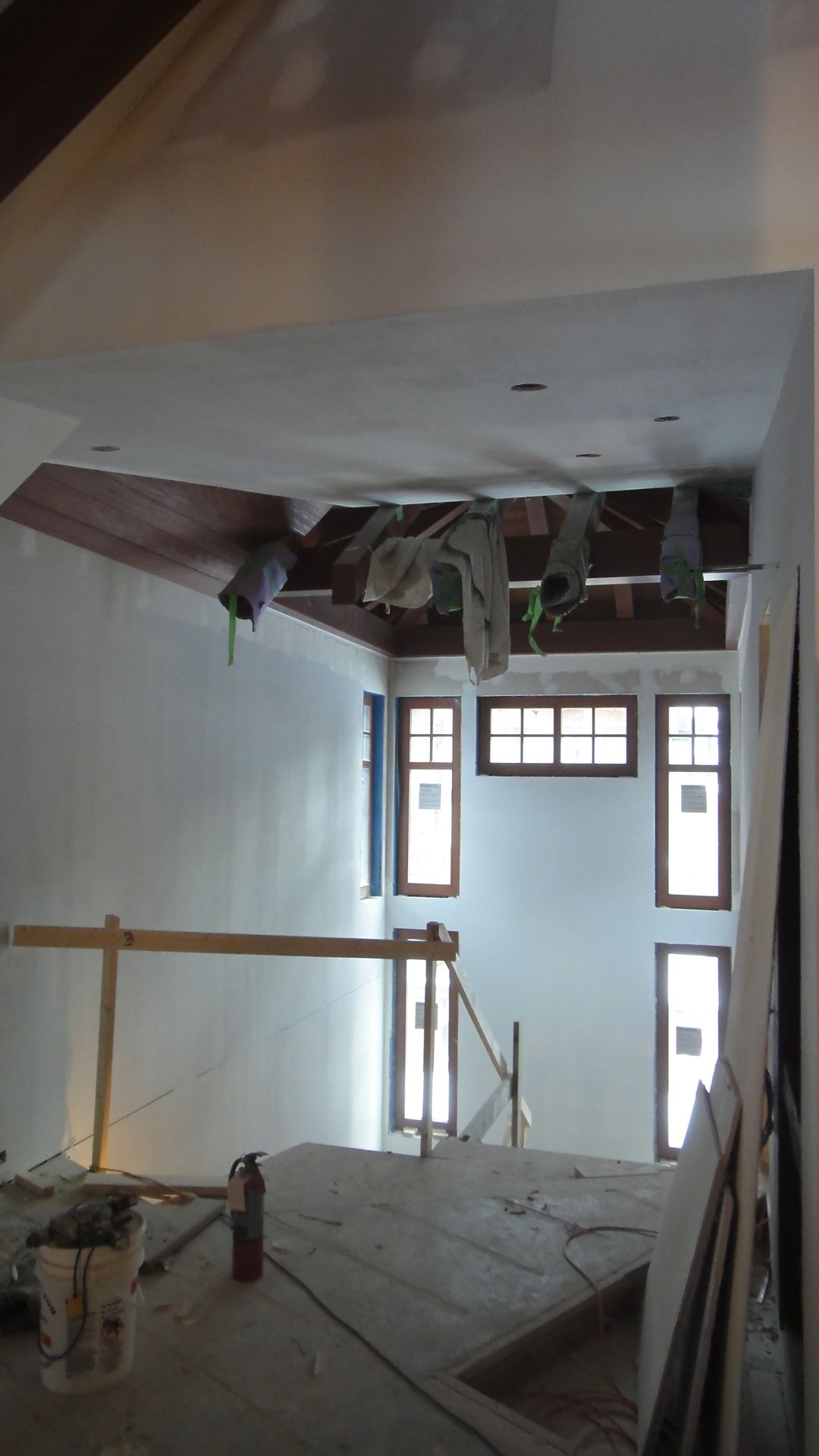
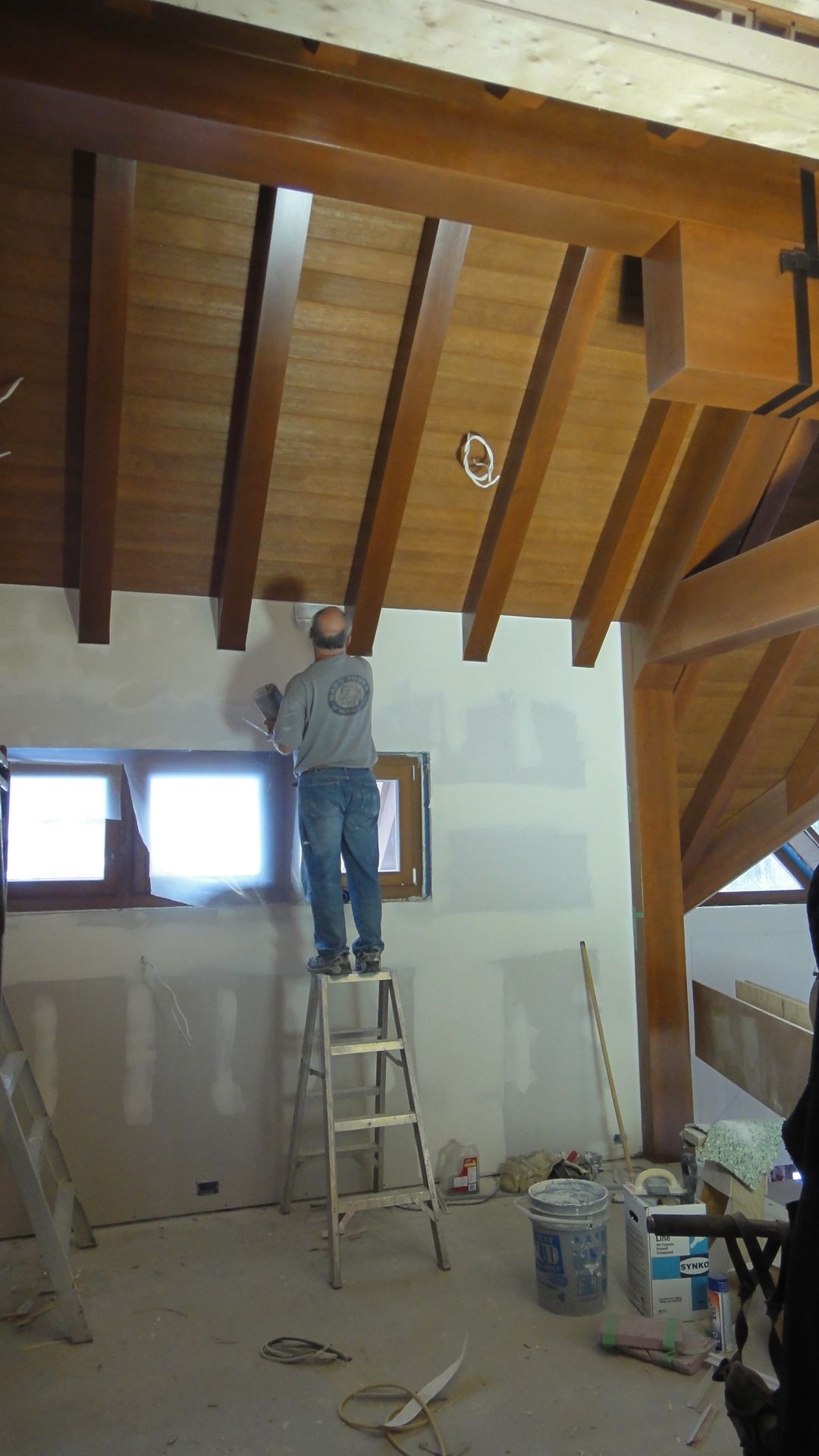
The process, the projects, the finished product: This is an inside look into how I create my Venetian plaster projects, making them come alive.

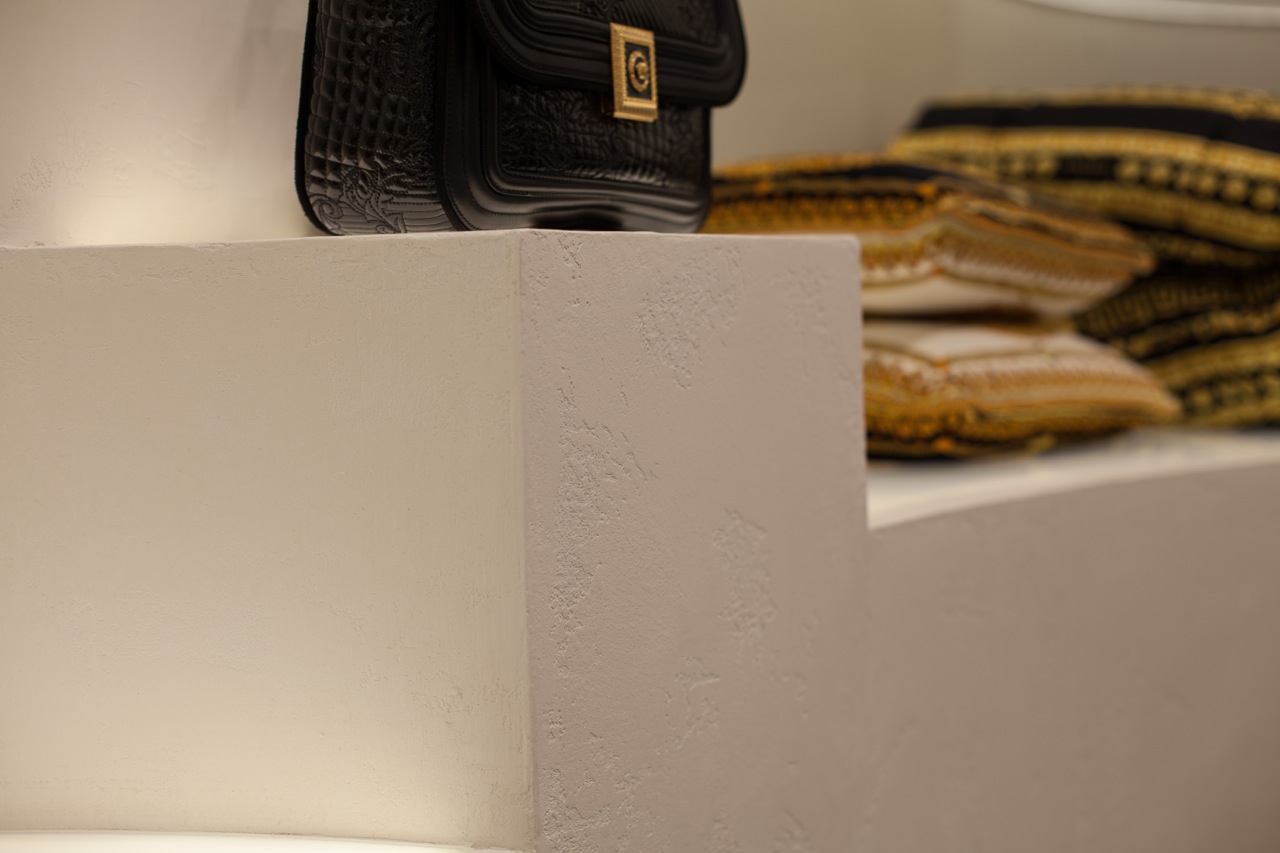
In this video, you’ll see steps used to create my Venetian plaster projects, including completed project photos of Classic, Carrara, Intonachino and Tadelakt plaster applications.

When it comes to my projects, it’s Stucco Italiano Italian lime plaster that is my one and only choice, and I think this video shows you why. When you think interior stucco think Authentic lime based Venetian plaster.

[Post to Twitter]  [Post to Delicious]  [Post to Digg]  [Post to Facebook]  [Post to StumbleUpon] 

Italian Lime Plaster Full Exterior


May 4th, 2012

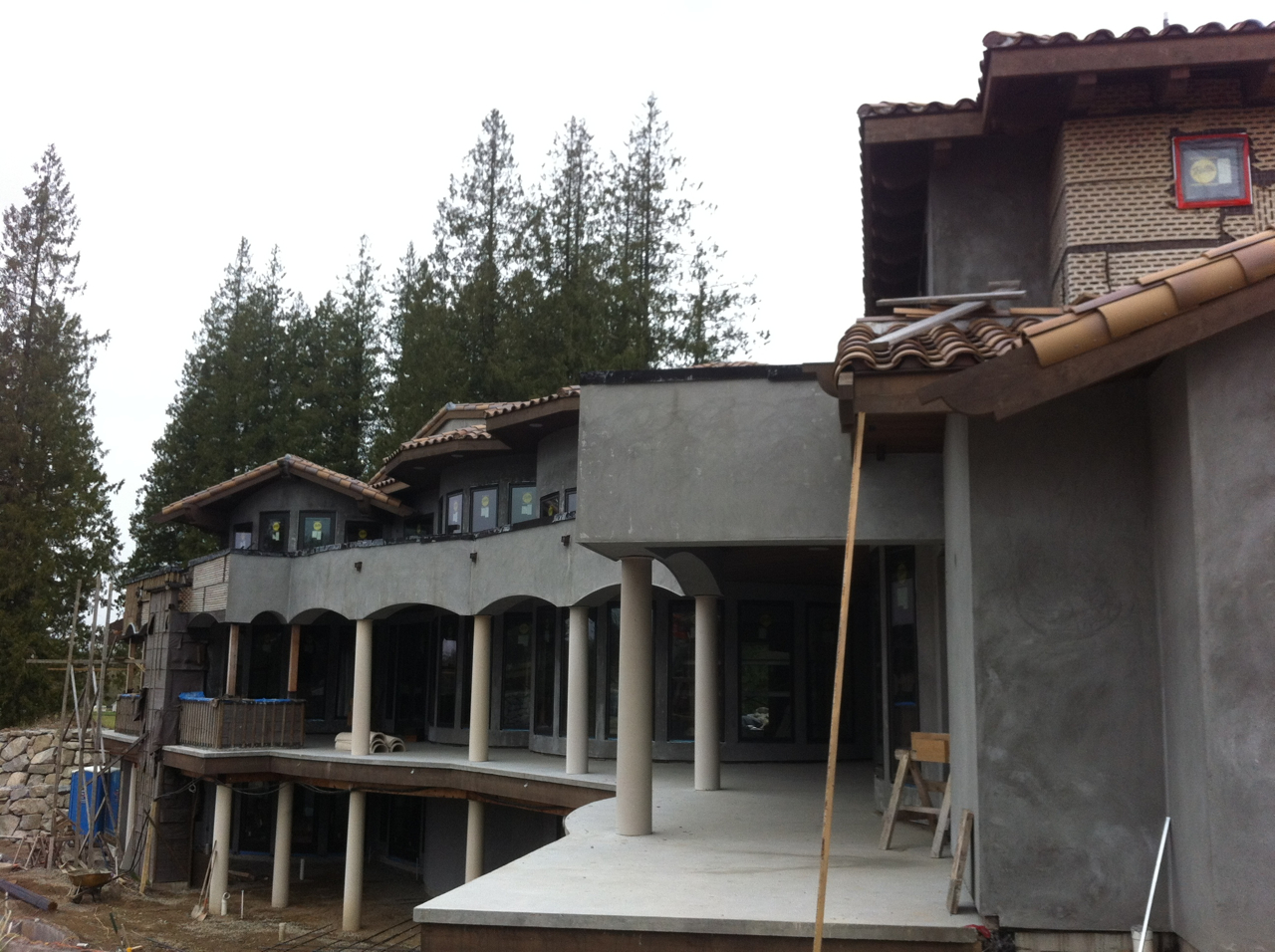
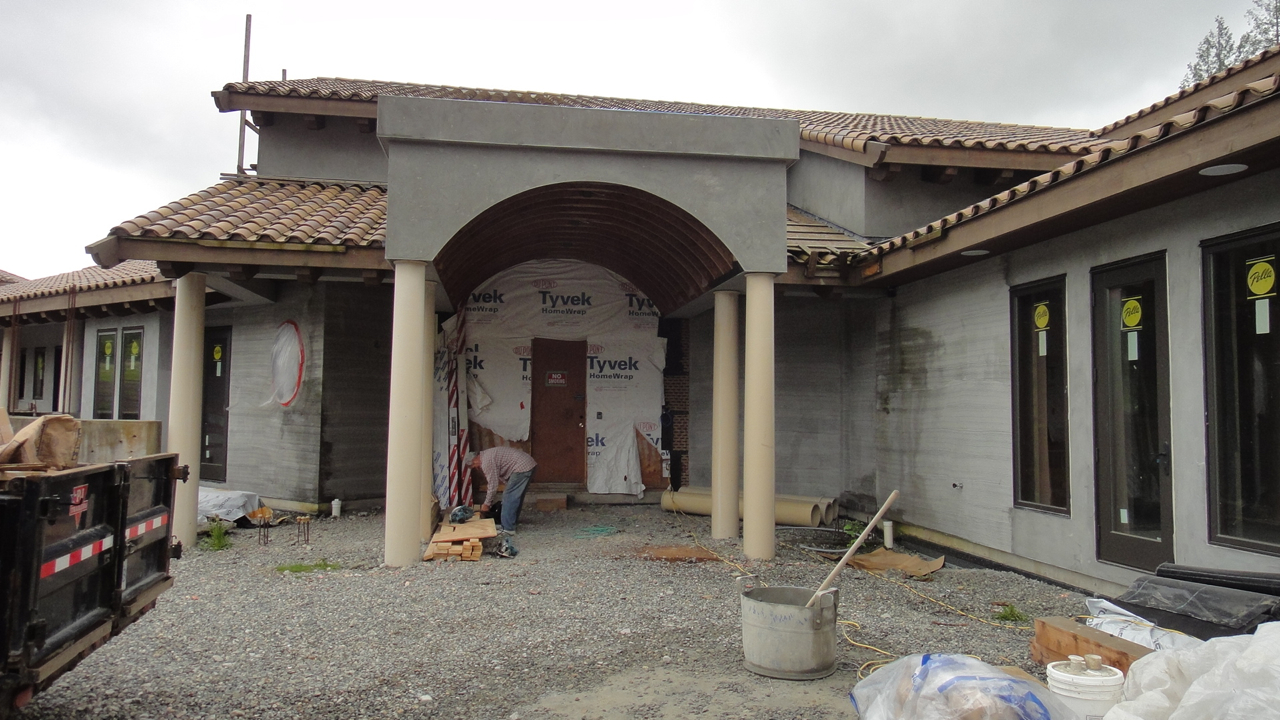
Its not everyday your dreams come true, this week for me they did. I have been dreaming of lime plastering this house for quite sometime and starting June 1st I get to do just that.

before

Not only are we Lime plastering this entire Tuscan villa, we also will be applying Tadelakt Lime plaster to all the columns and Lime painting all the fiber crown trim and moulding details of the full exterior. This home is going from new to old in a matter of a few months.

Be sure to check back in the coming weeks as this Italian lime plaster exterior unfolds

[Post to Twitter]  [Post to Delicious]  [Post to Digg]  [Post to Facebook]  [Post to StumbleUpon] 

Lime Plaster Vancouver Architecture & Interior Design


March 24th, 2012

What makes a beautiful Lime plaster finish so unique? In my opinion its the architecture and interior design taste of the clients. With clients in Burnaby, Vancouver, White Rock and all over the Lower Mainland, Architecture and Interior design is always changing. Lime plaster is the perfect material of choice that follows. Think custom fireplaces, feature walls or even full interiors Lime plaster projects.

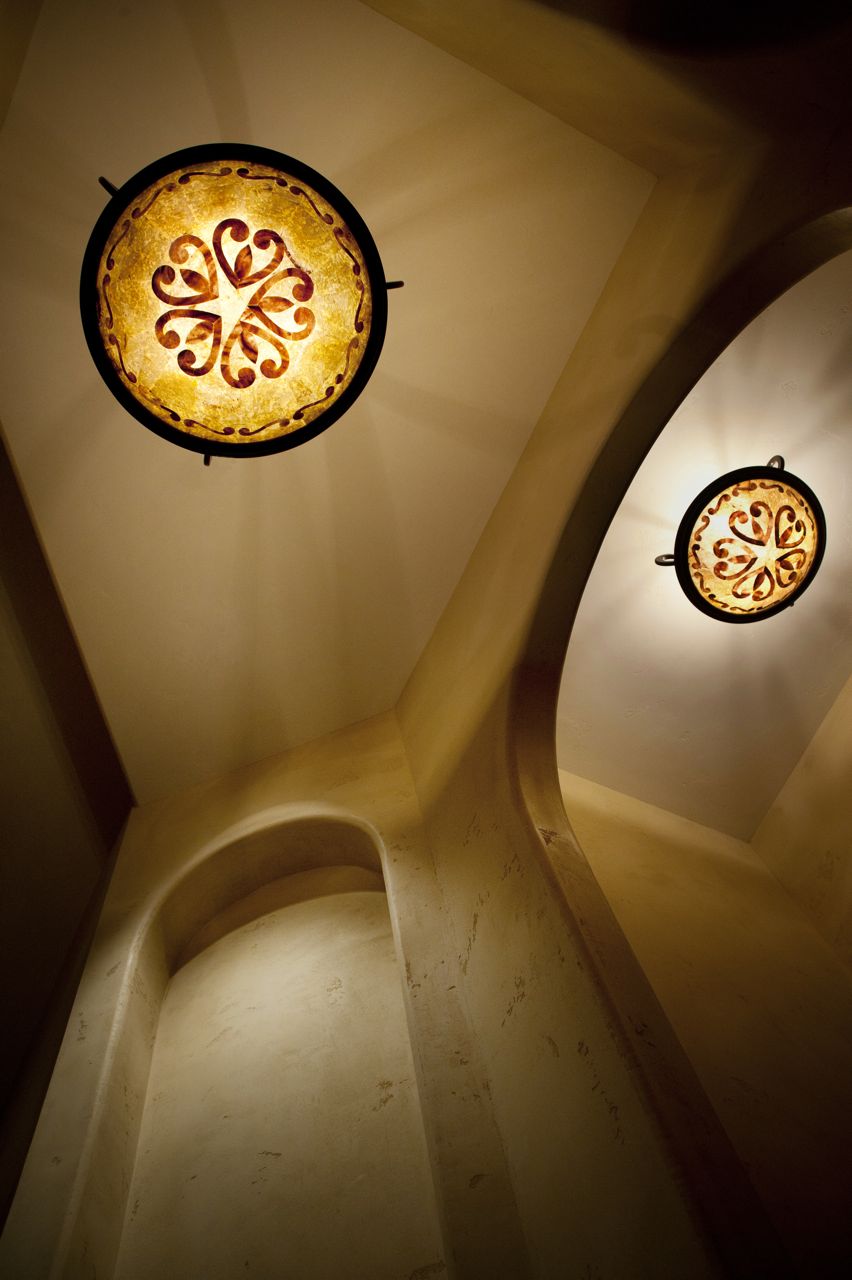
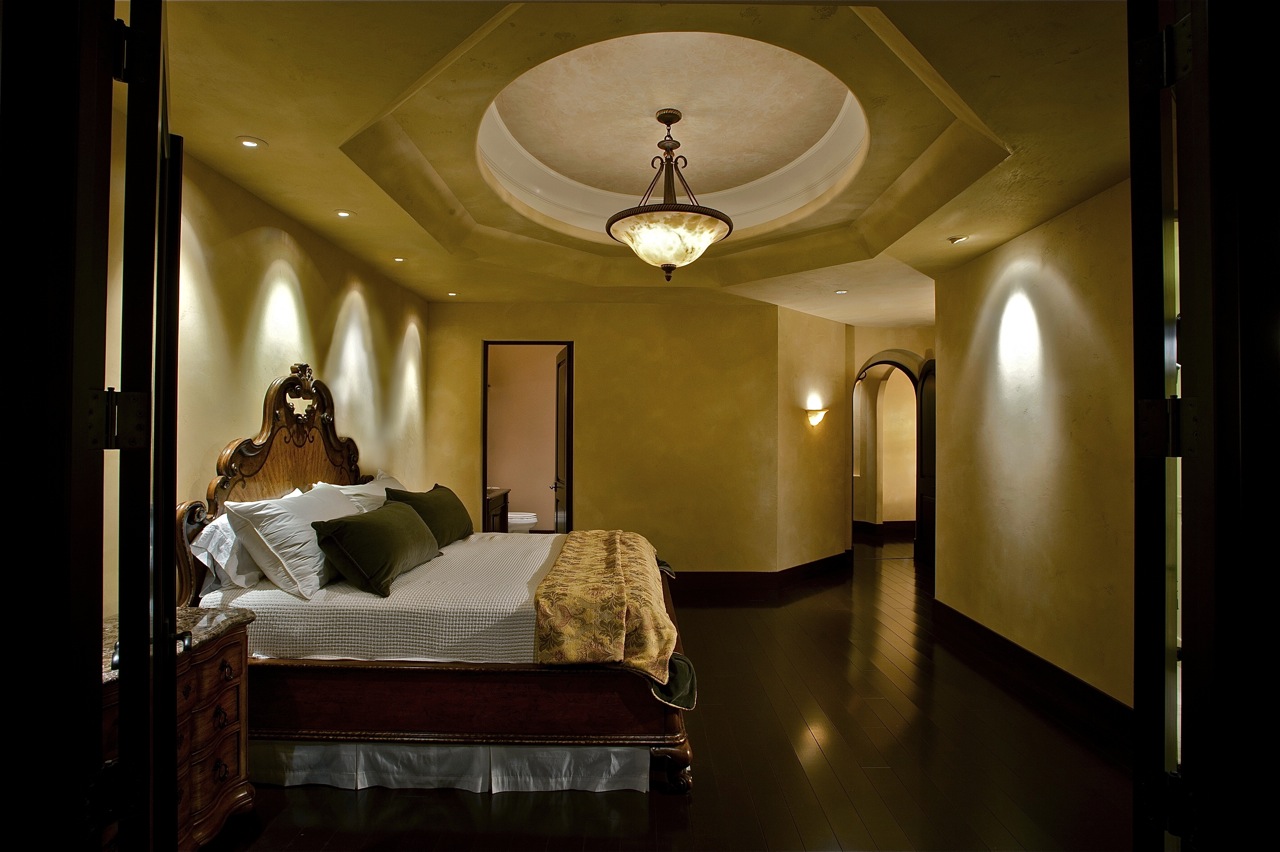
Does your master bedroom have Architecture with curves like these? Italian Lime plaster is just the thing to bring these walls to life.

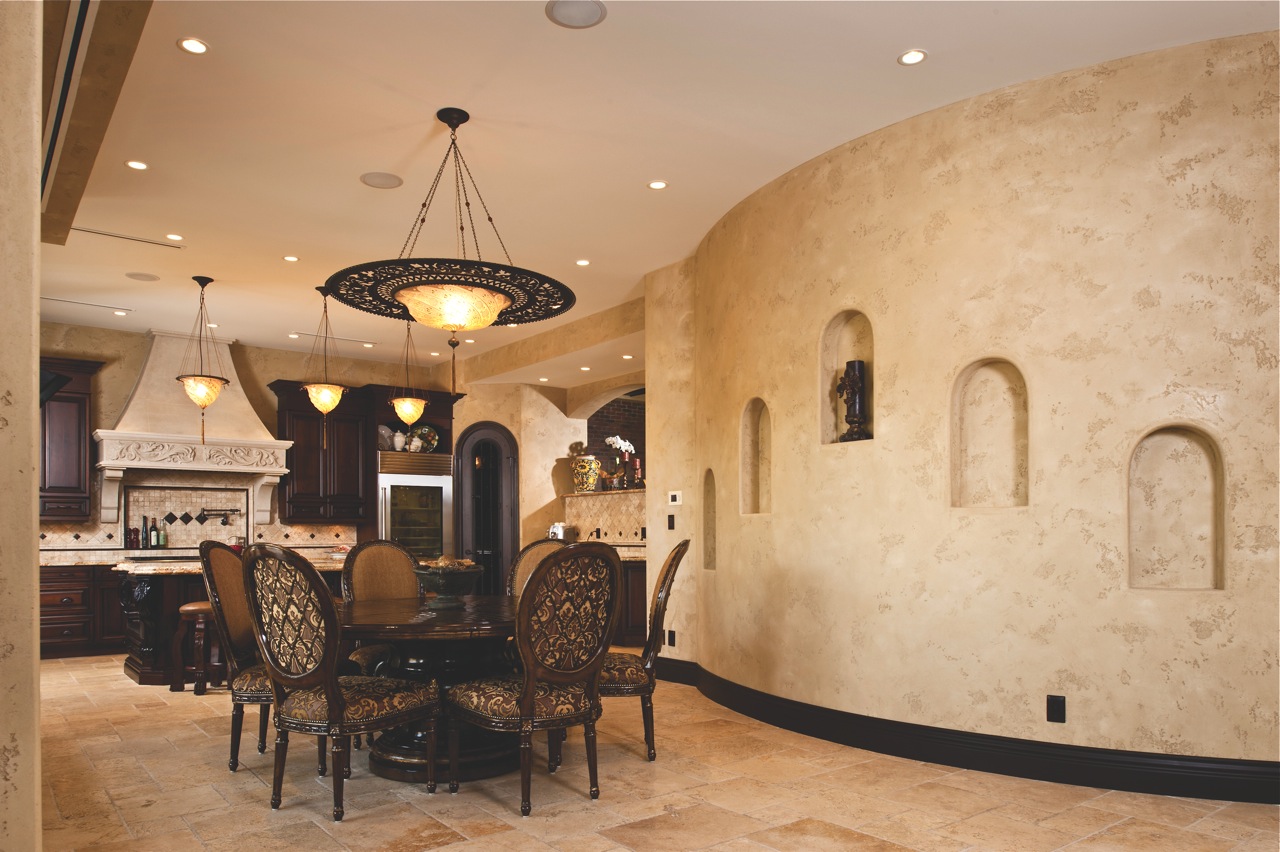
Does your style scream for a Tuscan Venetian plaster like this house?

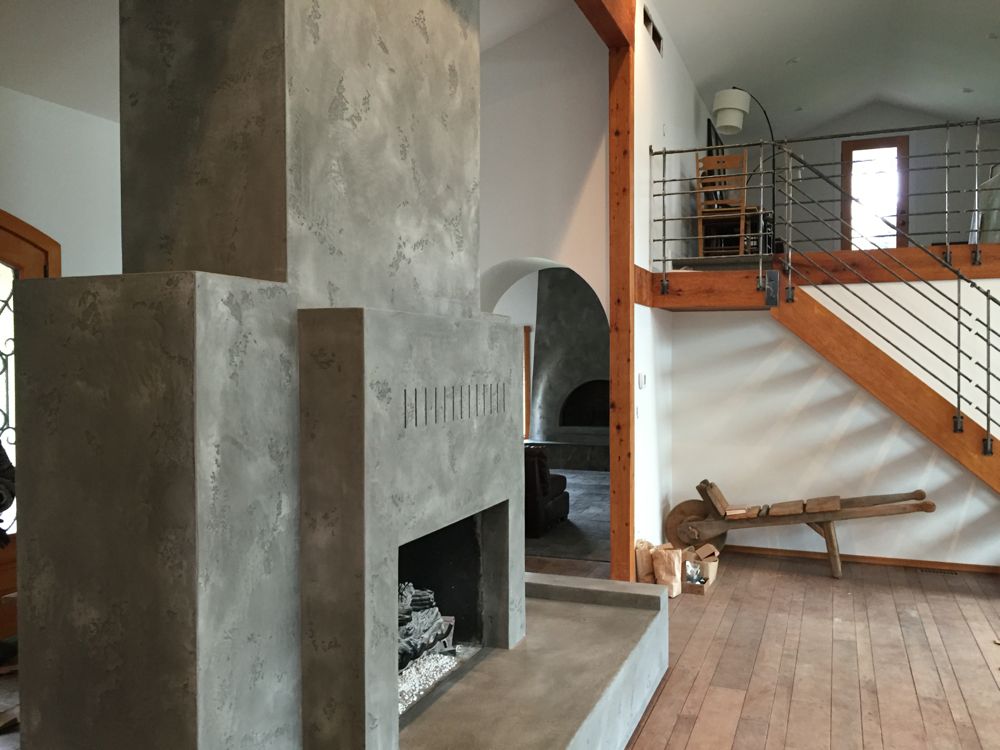
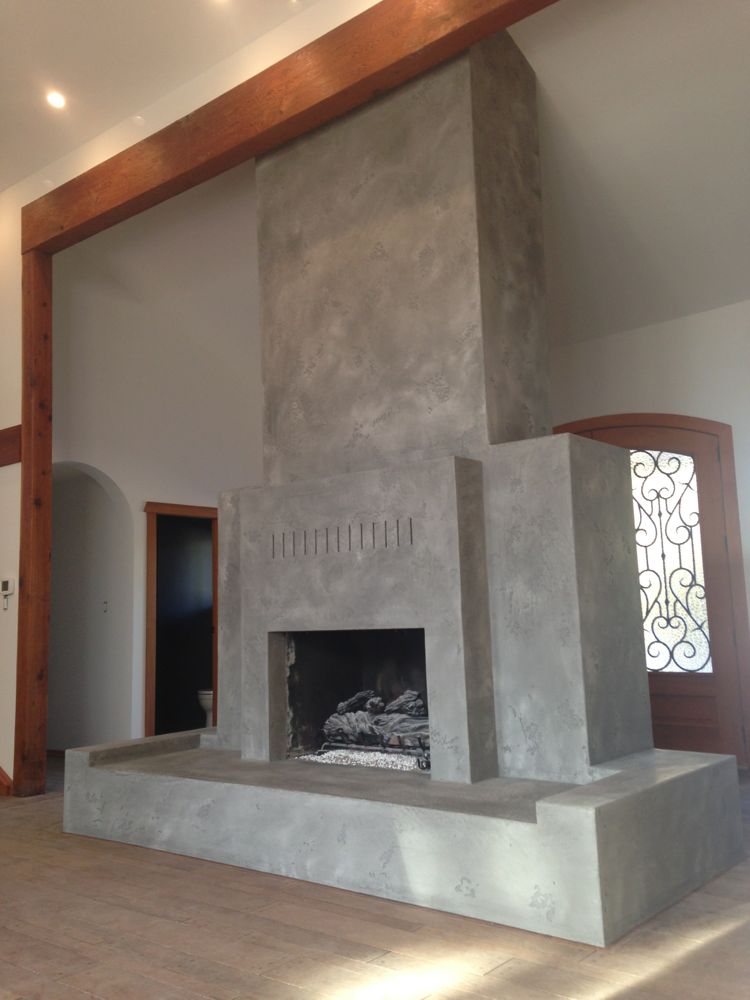
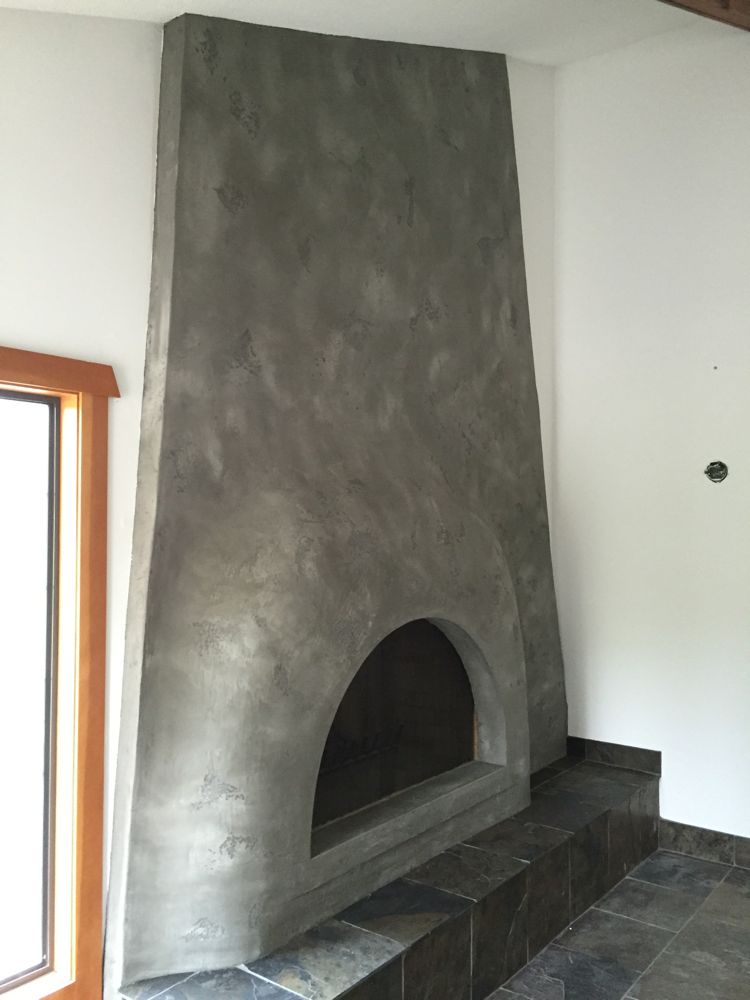
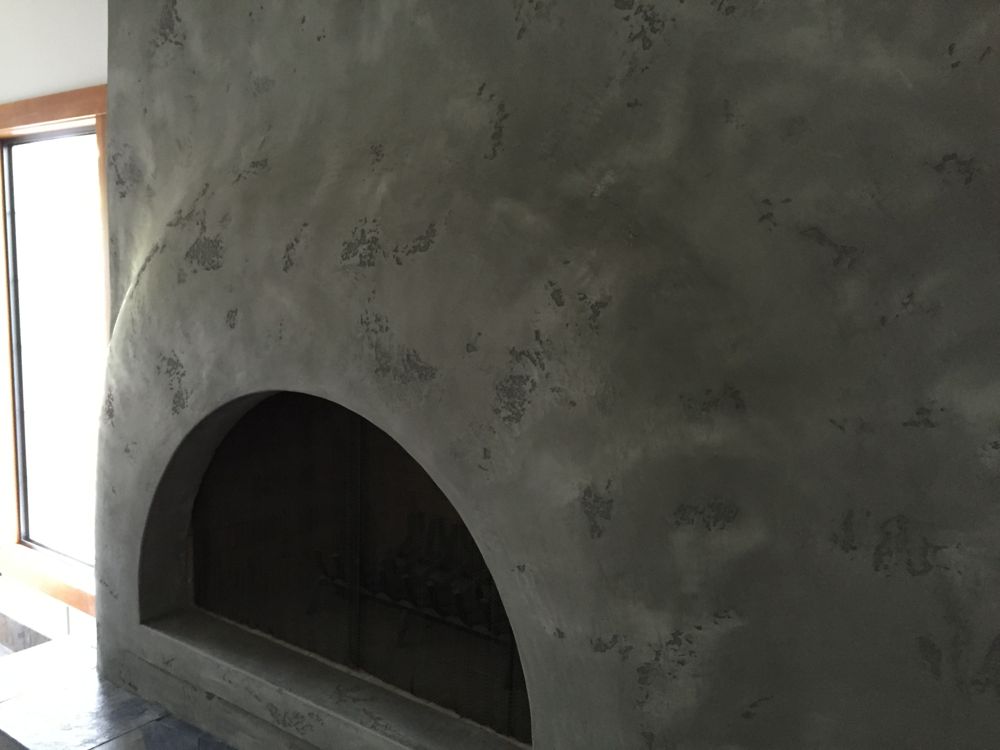
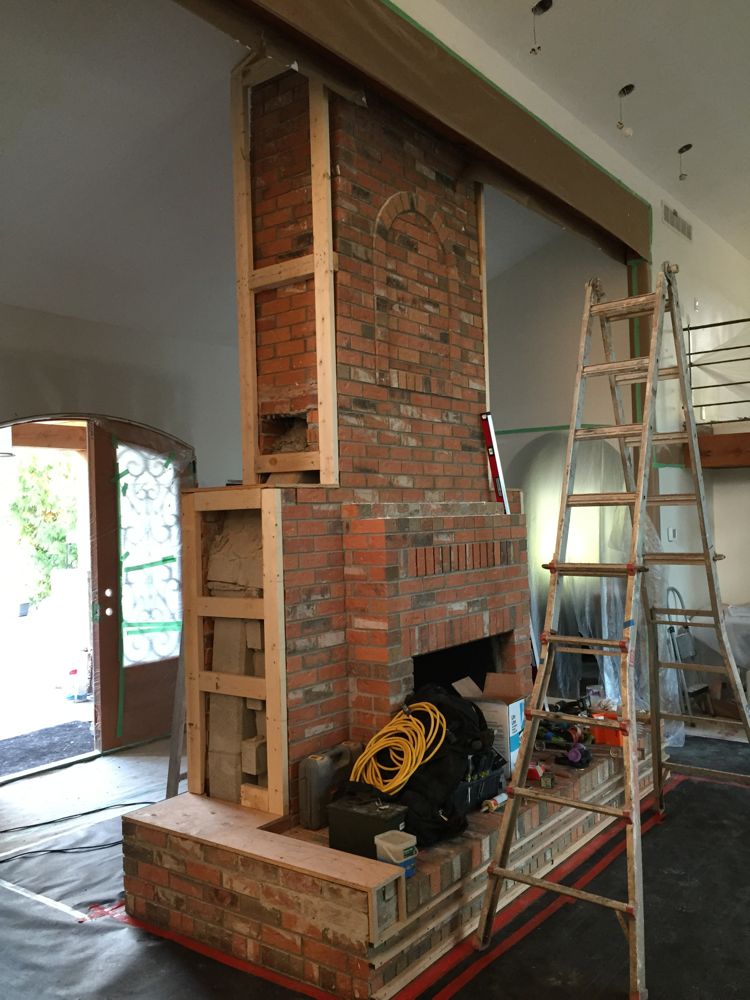
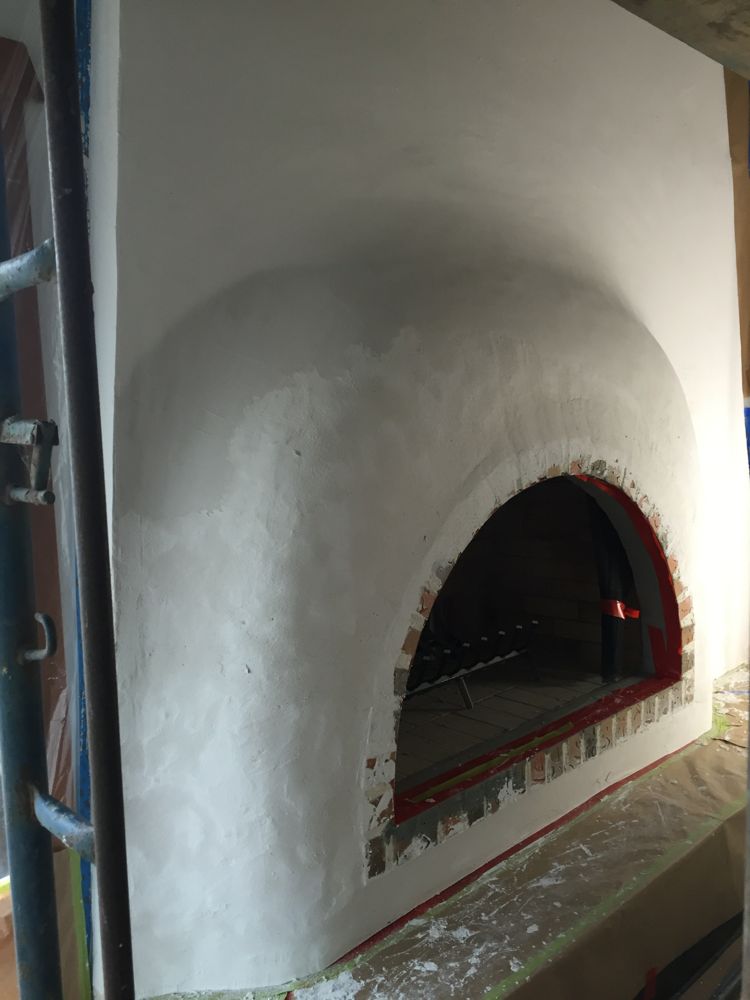
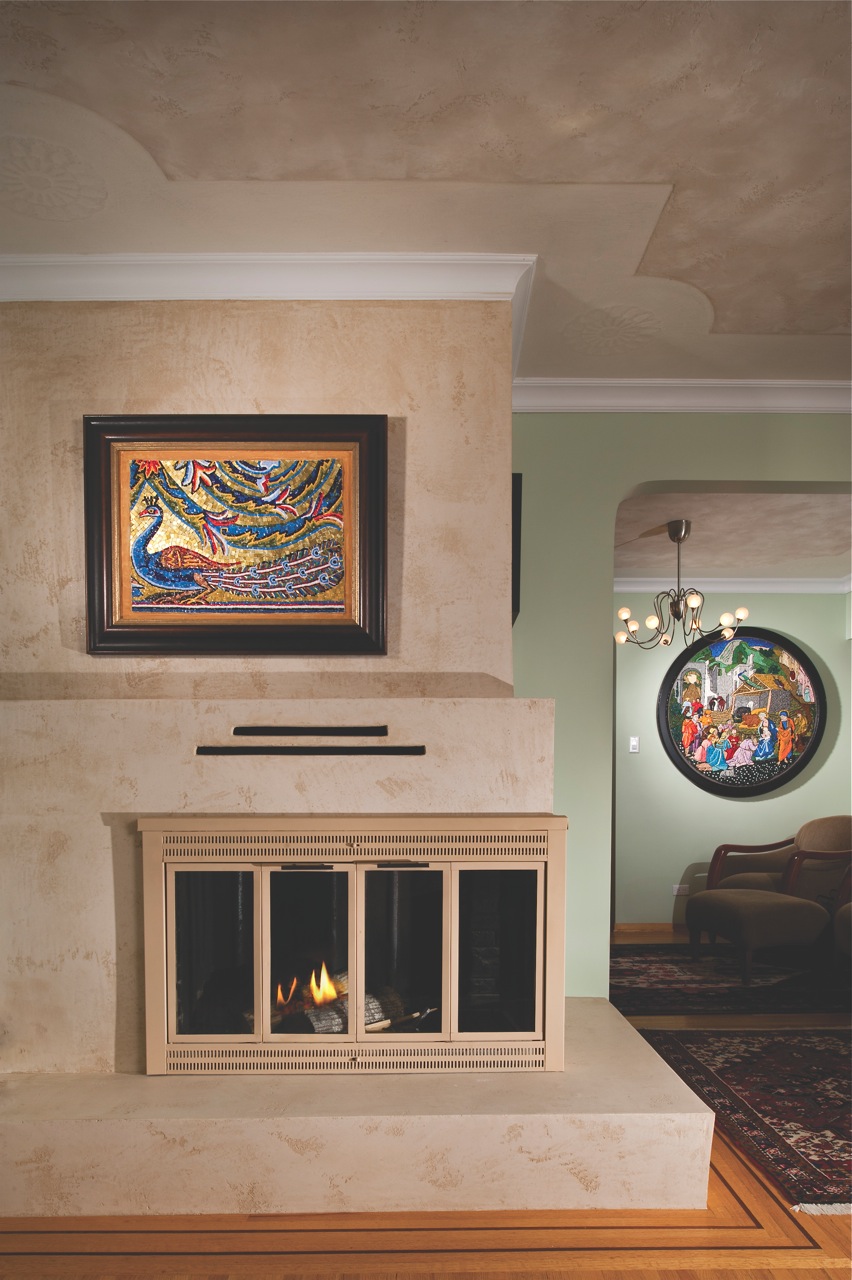
Possibly you have a fireplace that has been needing the recent uplift. Could you dream of a sleek fireplace in Tadelakt Lime plaster?

[Post to Twitter]  [Post to Delicious]  [Post to Digg]  [Post to Facebook]  [Post to StumbleUpon] 

Tadelakt A Shower To Dream Of In Venetian Lime Plaster


May 28th, 2011

If you know me, you know I’m a busy guy. It’s work, work, work, these days, and when it’s not about work, it’s about time with my wife, my girl, and the pups.

Needless to say, like most of us, I seldom get to do the projects around the home that I dream of doing.

That all changed in the last month, because not only did I finally get to do a bit of home reno that my family gets to enjoy, but I also got to try something I’ve wanted to do for a really long time — a heavy-duty Italian venetian plaster treatment to a bathroom shower stall.

This work was done in our main-floor bathroom, which had been wanting TLC for a while.

Doing any project for the first time, especially when it’s a bathroom, can make it hard to estimate all the work involved, so getting a chance to explore the process on my own time was great.

It was a major project by the time I finished, as you can tell by the end results, but what did it take to get there?

Here’s how the Home Shower Venetian Plaster Project evolved, start to finish.

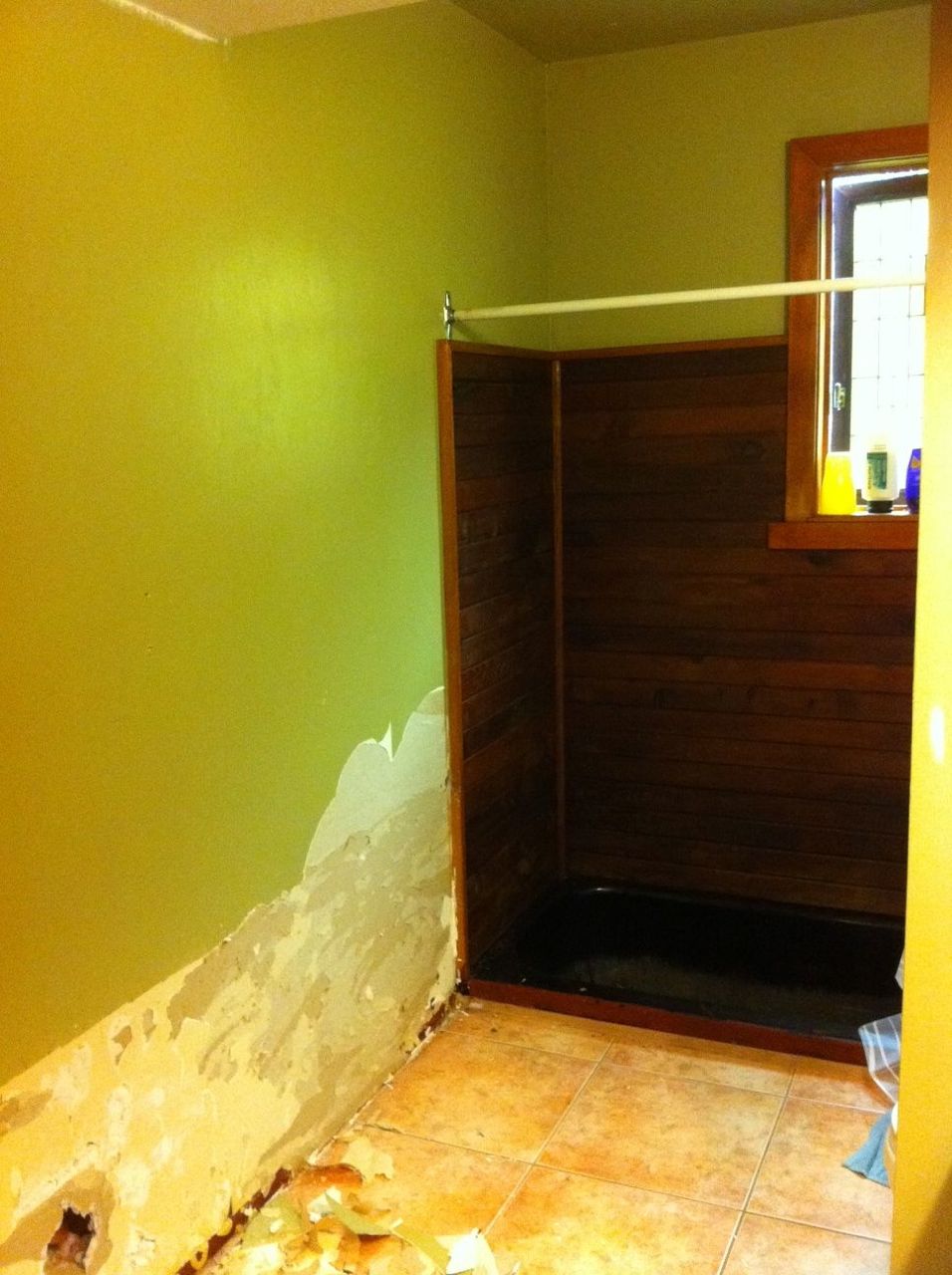
This ’70s bathroom came with tons of cedar, which all had to come down. Luckily, it was installed by someone who didn’t make much effort to do it right, so only a couple nails in each board ensured they popped right off. Removing the shoddy work made investing time in improving the room that much more satisfying.

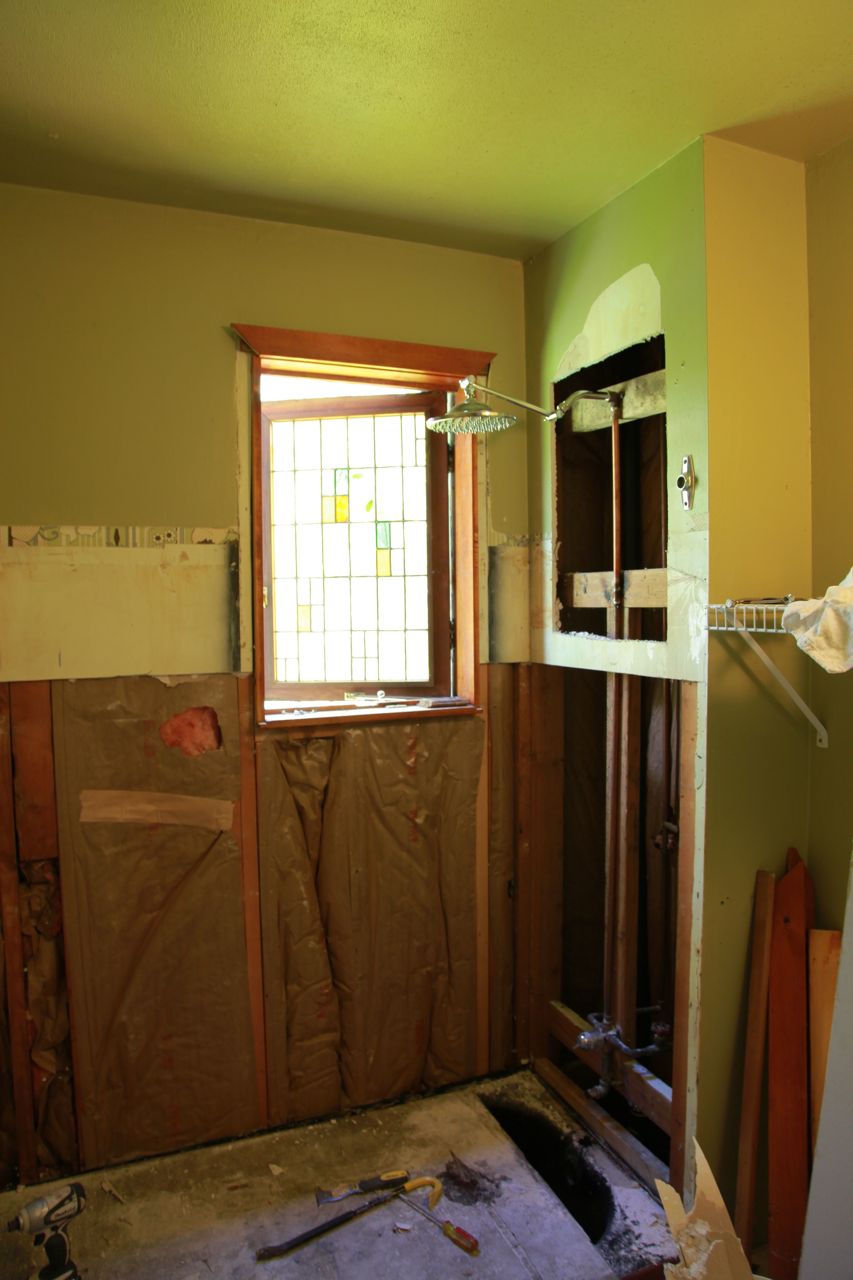
The first thing I wanted to do was move the shower-head up by about two feet. No one wants to crouch for a shower.

Before now, I never had the need, or an opportunity, to work with copper. I decided I’d take a kick at the copper can instead of calling a plumber, and working with the pipes was easier than I expected. I might do the odd fix-it job here and there now, but I’d certainly never do my whole place.

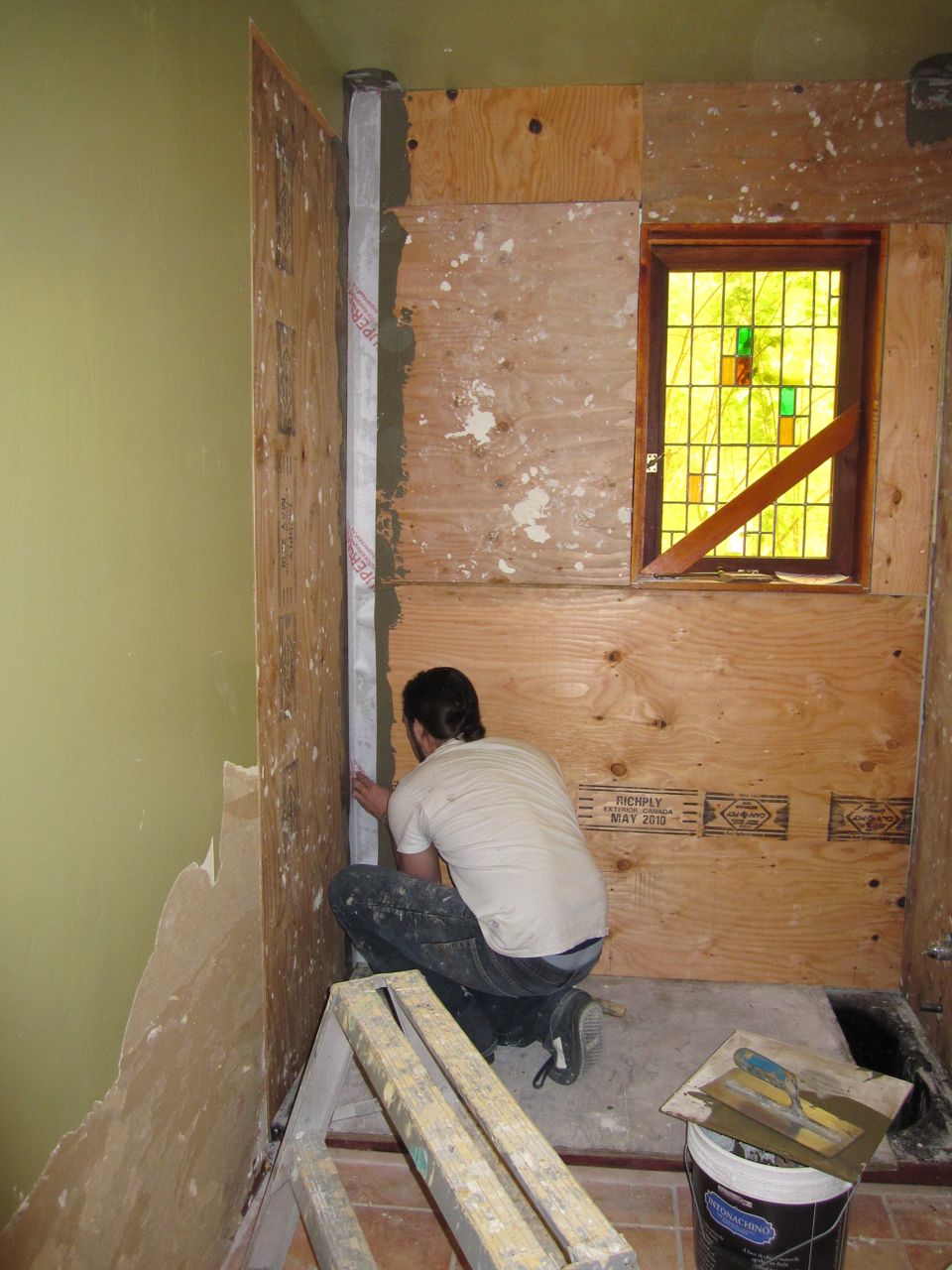
Next, I installed plywood. I’m sure some of you building guys out there are wondering “why not concrete board instead of plywood?”

It’s a preference, really. I find plywood’s just easier to work with, and it comes in big old 4×8-foot sheets, making for less cutting in some situations, but, most importantly, I find plywood’s a big help when it comes to installing lath. (Shown later.)

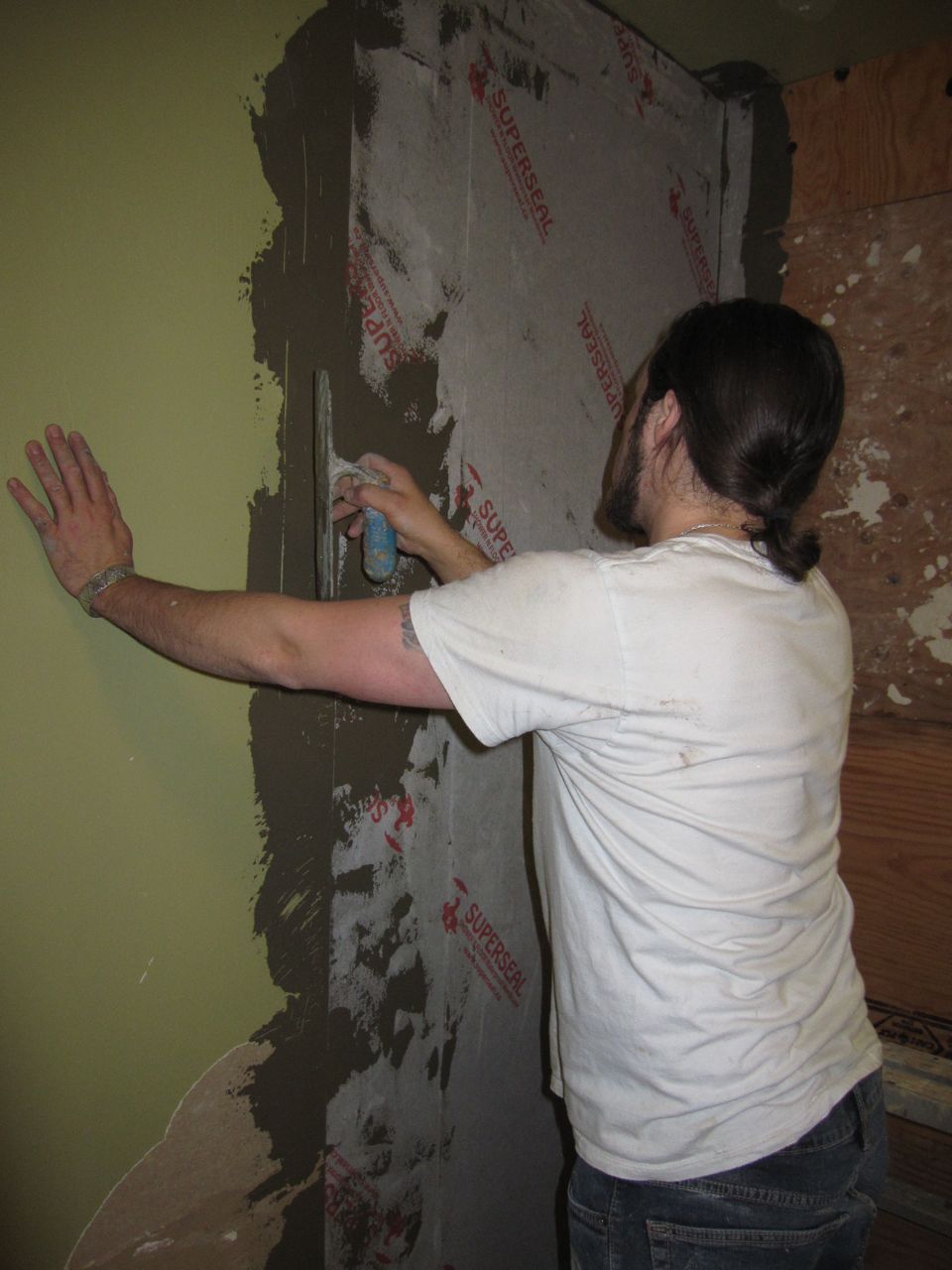
Next up was installing the water-proof membrane. Obviously a quality project is needed for a shower, and I used a local company’s product, called, “SuperSeal” you can learn more about it here.


Then came the lath, and that installation was definitely a two-person job. Getting the lath stretched into and around corners took a lot of force and grunt-work. As we got through that, here’s how it got to looking:

Finally, after all that, it was time to do what I love best — the plastering! First, I slapped up two coats of concrete so there would be a ½-inch seamless base for the lime plaster to build upon. Concrete’s not a pretty project — it’s sloppy, and it made a mess of both a floor and me.


Then came the wait. It took a week — six whole sleeps! — of waiting for the concrete to fully cure, and then I finally got to start the really, really fun stuff — the tinted lime plaster.

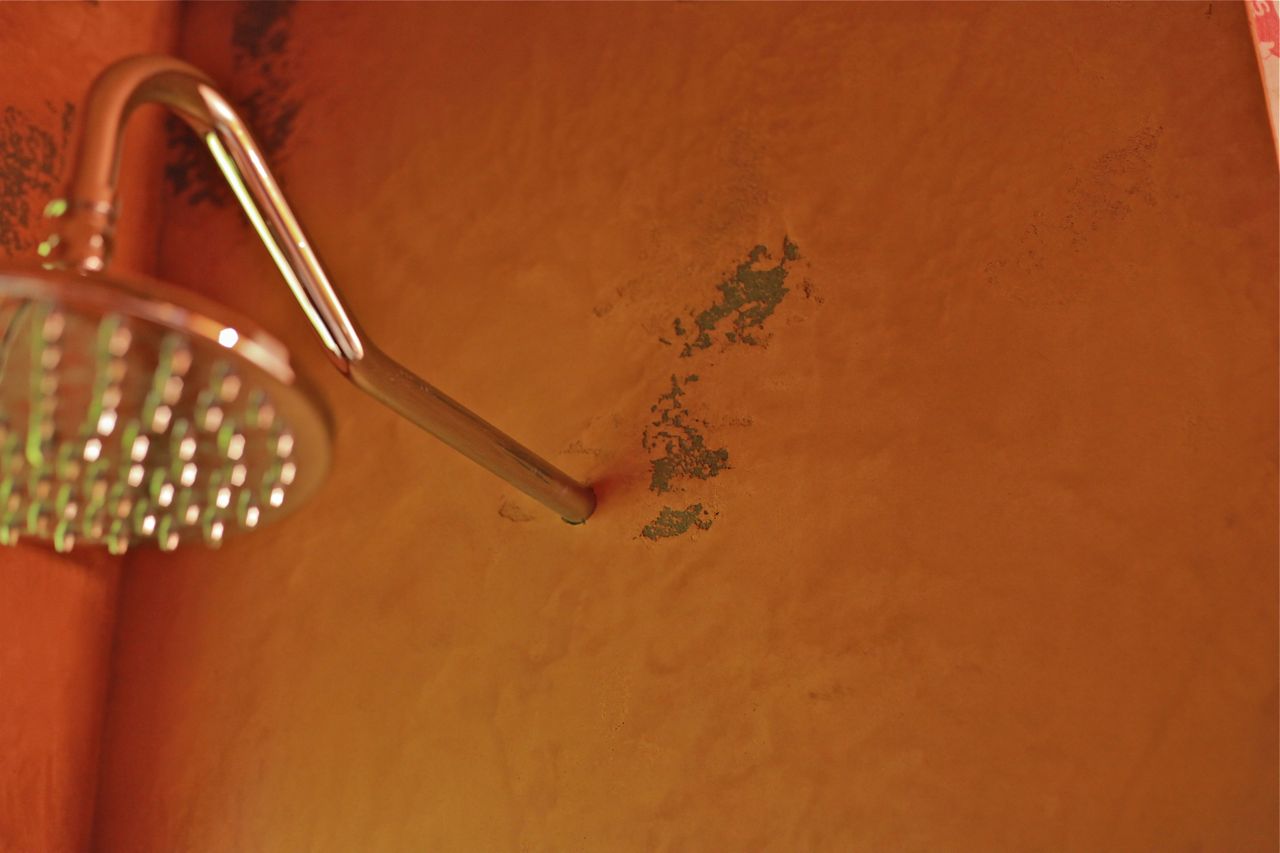
I went for a rich, warm colour palette, which really stands up well in the space. Here’s how it looks:


Like most weekend do-it-yourself renos, I ran out of time and some finishing still needs doing on the rest of the details. One day, the countertop will get changed out, and clearly the white curtain needs to go. I just need some 30-hour days, maybe.

It was a fun adventure, one that pays off every time I walk in the room.

Is plaster something you’d consider for a bathroom now? There are a lot of good reasons to choose plaster over tile or other options, and I plan to share that with you in the coming weeks.

Until then, keep checking back — lots of big projects are ahead!

Cheers,
Darrell Morrison

[Post to Twitter]  [Post to Delicious]  [Post to Digg]  [Post to Facebook]  [Post to StumbleUpon] 

Venetian Plaster Project Walk Through Video


April 3rd, 2011

When you’re a guy working in the building trades, it’s not very often you get to travel for work, let alone work in a place like Banff, Alberta. This fantastic retreat in the mountains has been a dream-like project for me, and I’m happy to share with you this video of a walk-through of how the project’s coming.

As the build got further along, more plaster work got added to my slate. I love an owner getting excited about my technique and wanting more as the work progresses, especially in a place like this. By the end, Stucco Italiano’s Italian plaster was used throughout, stretching from the bottom up to the third floor.

Please set your viewing to high-def for all the detail!

Take a look at the waxed deep magenta plaster walls in the powder rooms, which includes that awesome entry feature and incorporates those subtle smooth textures across the walls and ceilings, on all floors.

Why would you want to use Italian plaster over both walls and ceilings? You have to consider the characteristics. No paint will match the beauty or durability over the long-term like Italian lime or Venetian plaster, and when you’re creating a mood in a room, why would you neglect the ceiling?

When the colour is fortified right off the bat, as I hand-mix plasters for application, including base coats, it gives a rich layered finish that doesn’t look man-made — it looks like it just belongs that way. It’s natural, rustic, and amazing for creating a mood in big and small spaces.

Lime plaster builds an atmosphere you just can’t get with only paint, and I’m a painter saying that.

When you’re talking about any kind of art or space, lighting means everything, and it’s definitely true with Intonachino plaster approaches I use in my Venetian/Italian lime finishes. As light moves across the room, during dusk through to dawn, and the light shifts from season to season, it changes the way the plastered surface appears, and you’ll always notice something different. It’s almost like your walls are a living part of your space.

This video will provide a perspective on the feel created with these finishes, but if the same video was shot at different times of day, you’d get more a sense of why I say that lightning — natural or electrical — is plaster’s best friend.

It’s been a while since this amazing journey began. Have a look at how far we’ve come, and how this plaster came to life. Click here to see the beginning blog posts.

[Post to Twitter]  [Post to Delicious]  [Post to Digg]  [Post to Facebook]  [Post to StumbleUpon] 

Sather residence Banff Italian Lime Plaster Interior


January 21st, 2011

Another week has come and gone, and I’m a week behind on my blogging — with pretty good reason, too!

My crew has been working really long days and straight through their weekends in order to keep up with production on the house, since the trades are all making huge advances these days, and there are a lot of pictures to prove it.

If this is the first time you’re dropping in to looking at this project, I’d suggest going back to the beginning of this amazing Rocky Mountains Italian lime Venetian plaster project in Banff, right here.

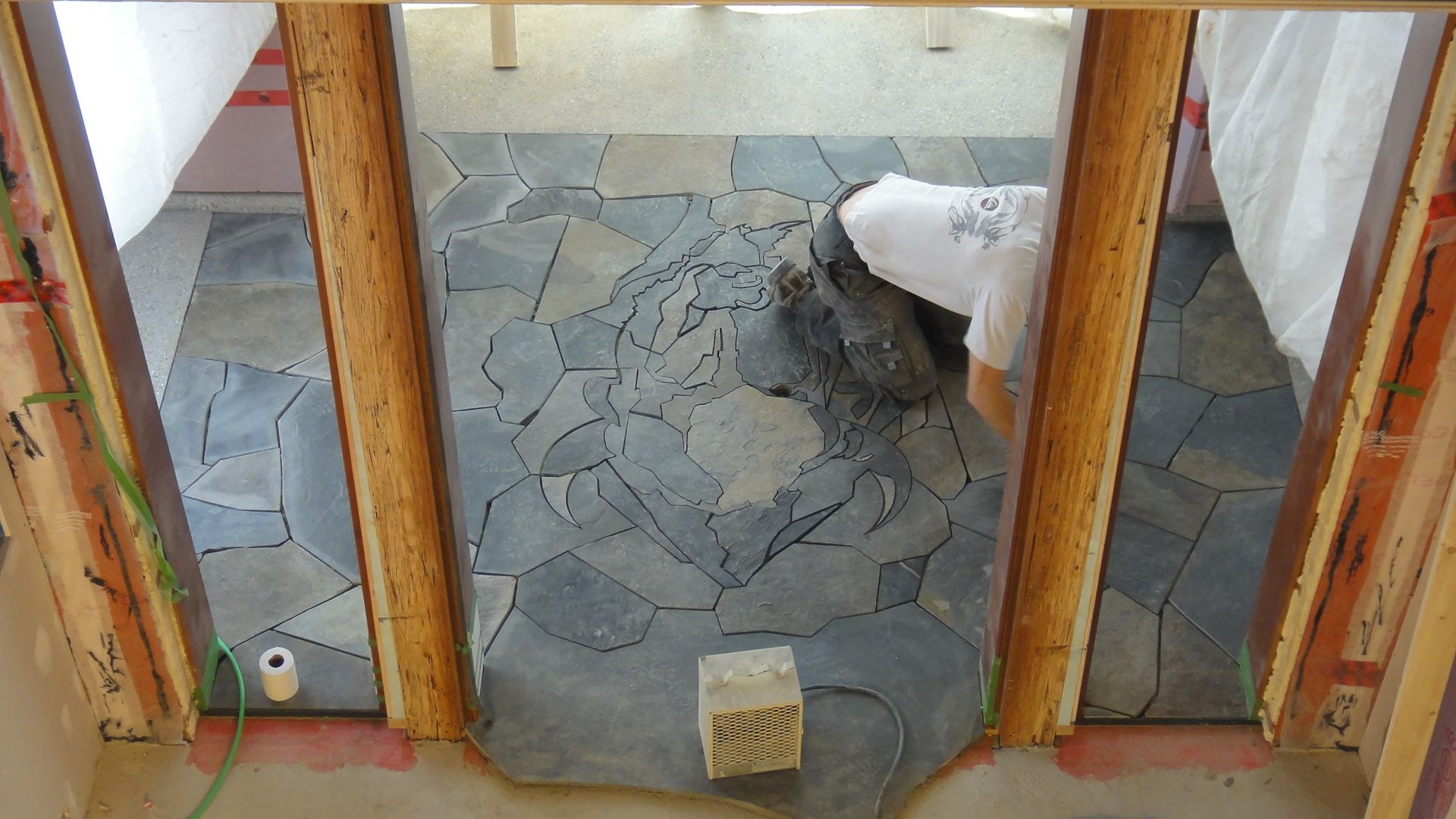
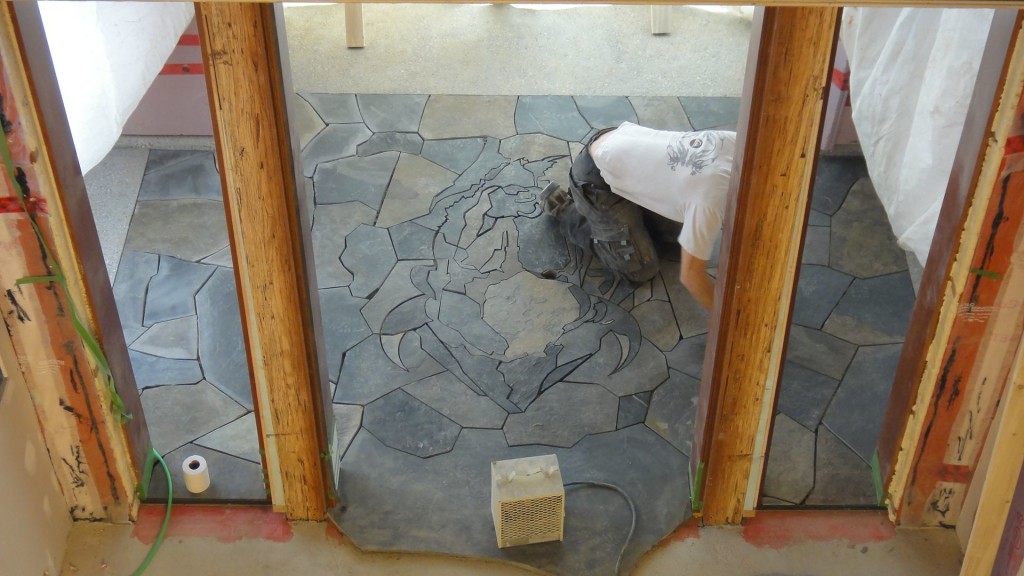
I’ve been loving the level of work from everyone involved in this project. Get a load of this amazing buffalo design in the stone flooring, at the main entrance.

It’s almost like a giant puzzle, isn’t it? I bet there’s a lot of people who’d love to put a puzzle this size together, but I sure wouldn’t. The precision needed to lay this tile is a pretty rare skill, even at this level of the game.

Talk about a mistake getting set in stone… Not for me, thanks. I’ll leave that to the pros.
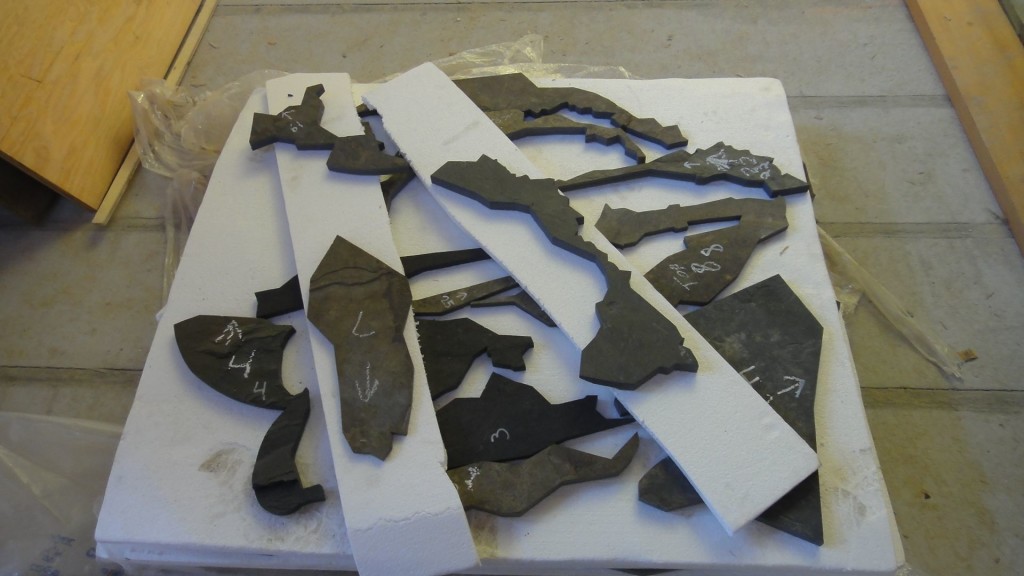
Here’s another look at the stone buffalo, from the second floor.

A little trivia for you: Did you know that Alberta’s home to one of the two last continually wild North American buffalo herds?
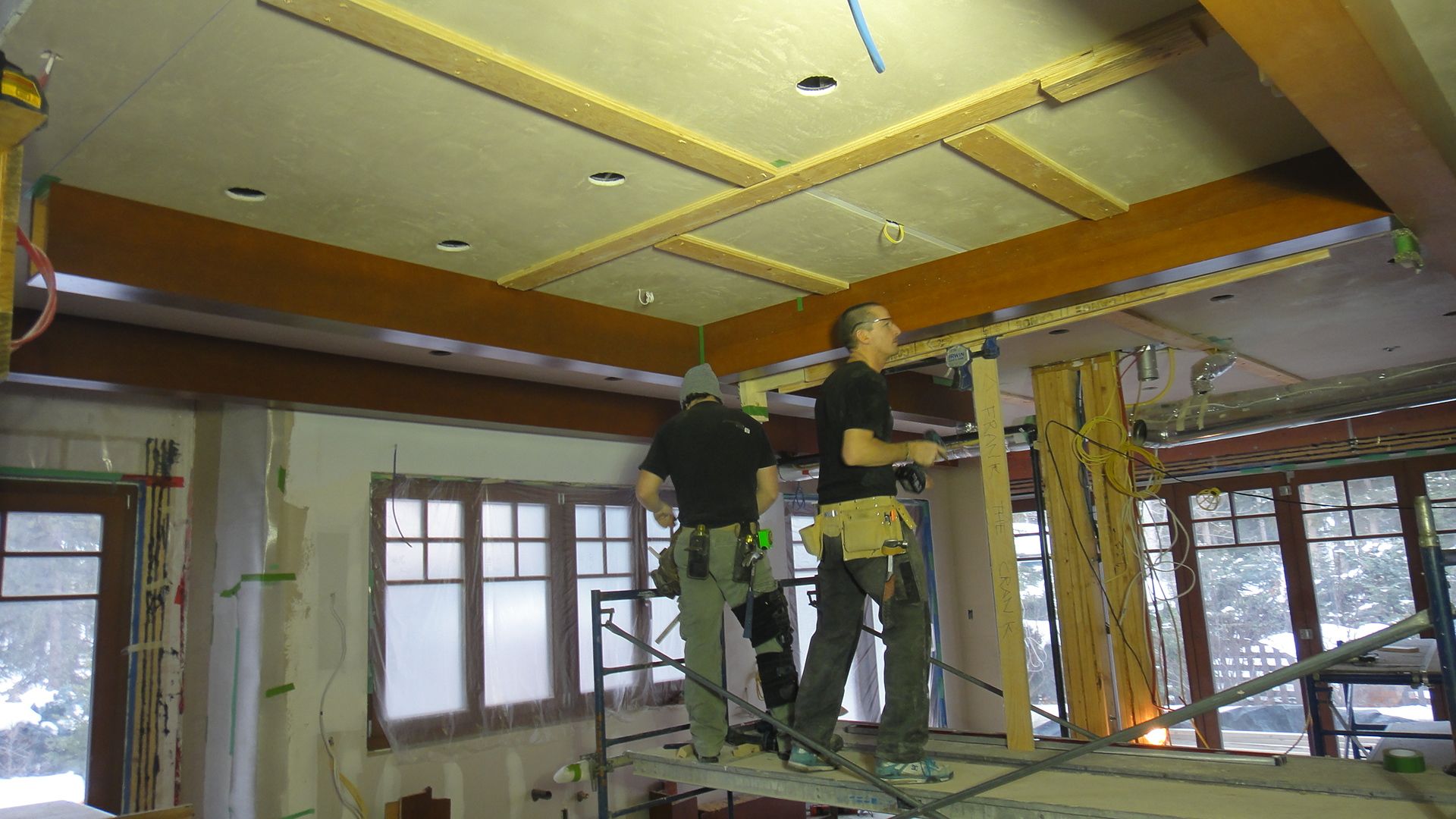
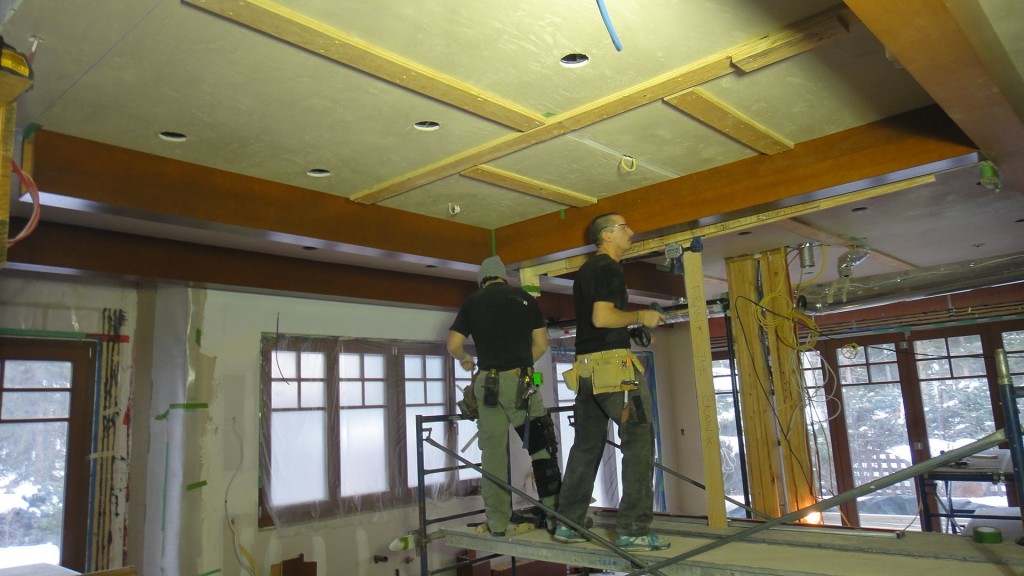
After the Venetian plaster finish on the kitchen ceiling got polished off, other teams got to put the beams up. I’m loving the look and the contrast of the smooth wood against the rustic lightly-pitted plaster, but can’t wait to see it stained.
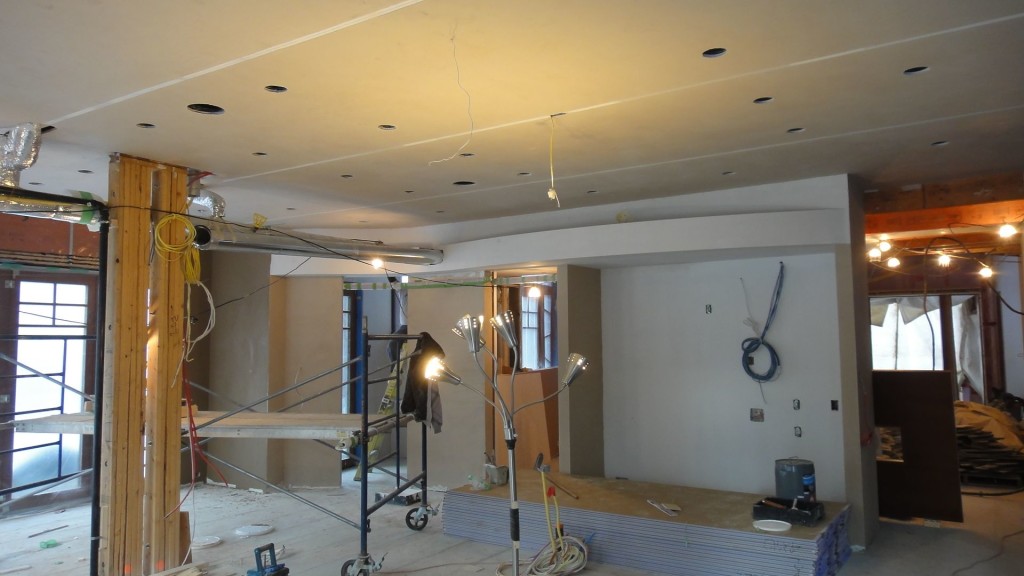
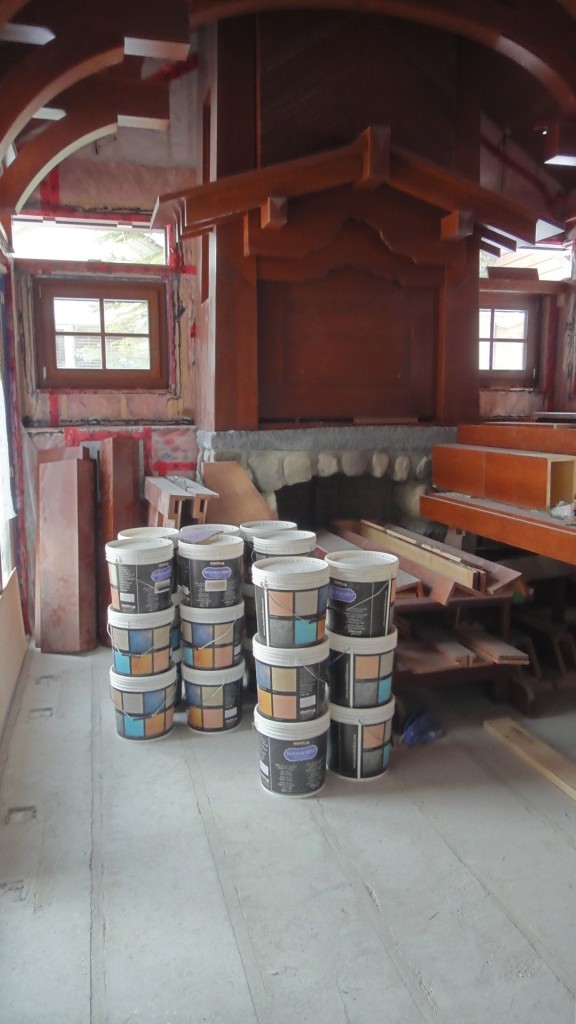
Another shipment of material showed up this week, which meant more walking up hills and stairs covered in snow, hauling plaster supplies.
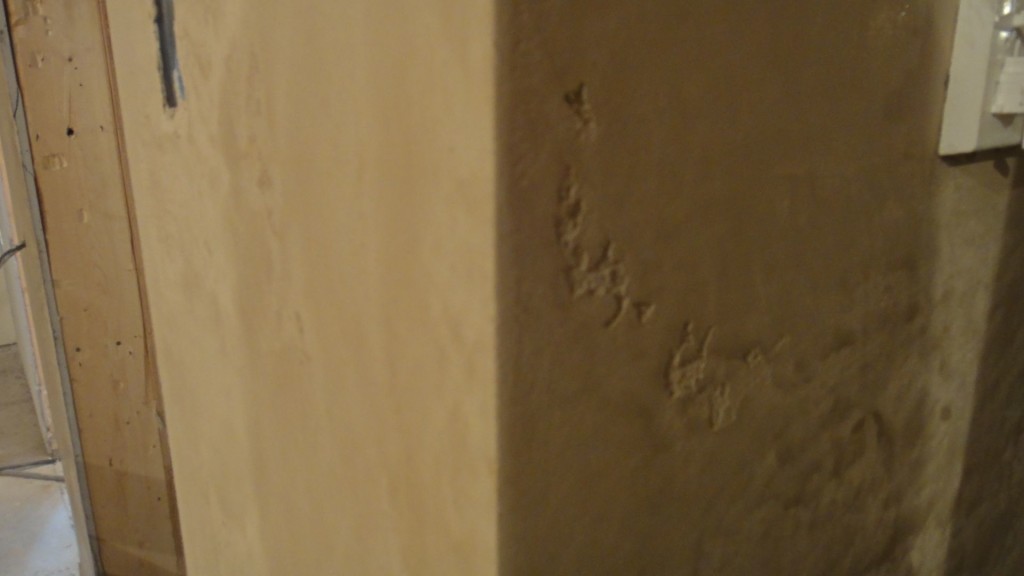
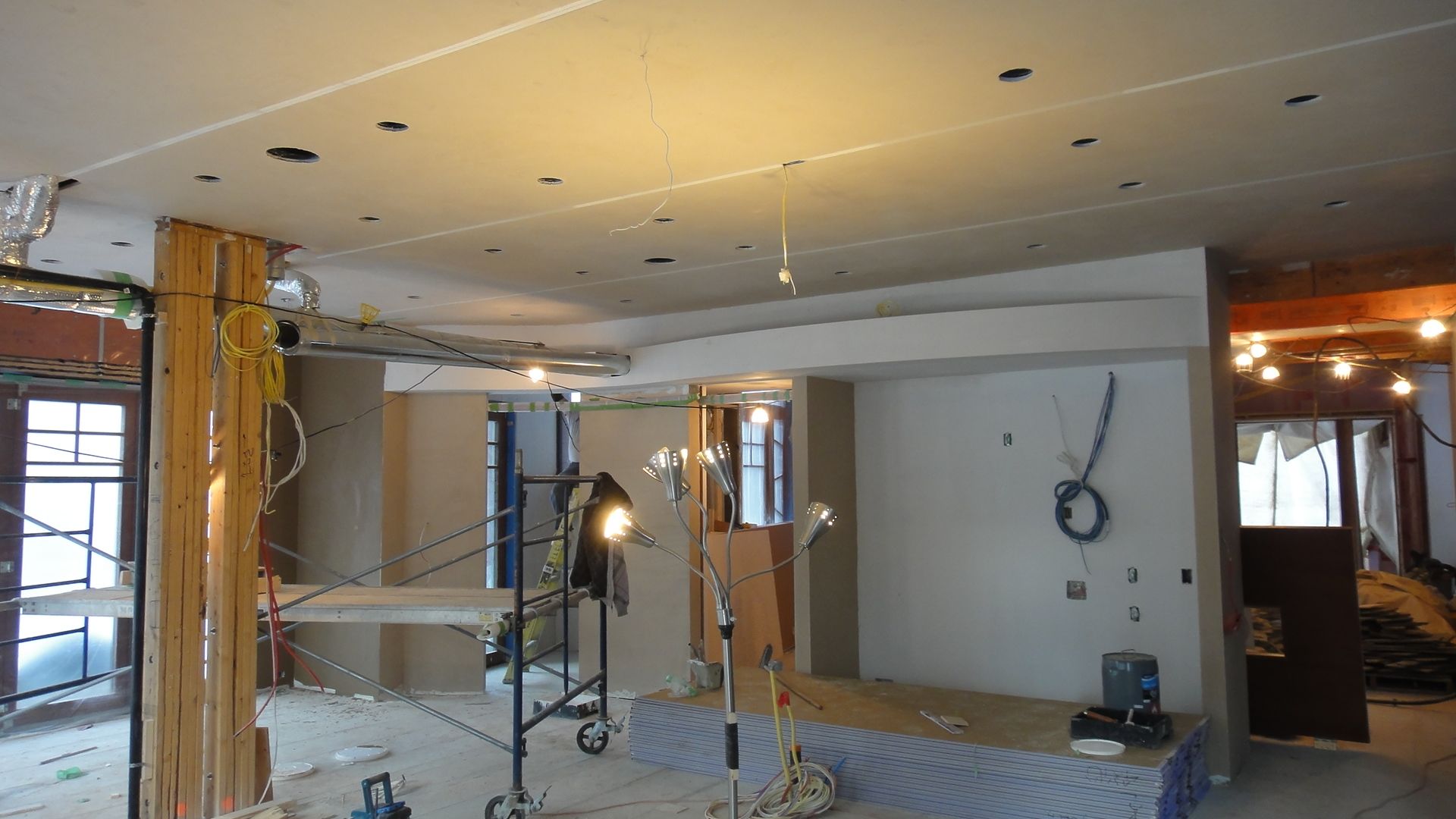
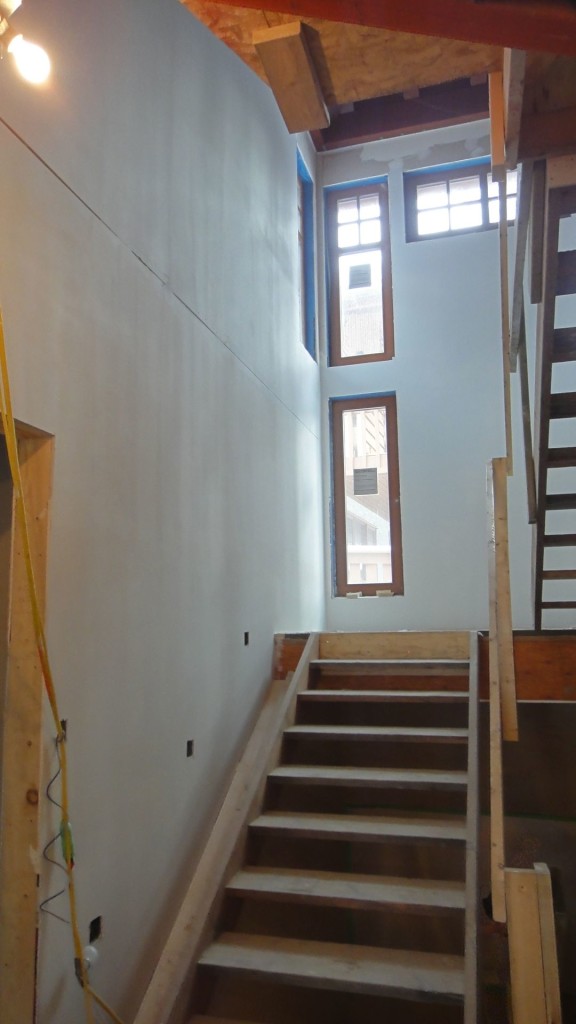
Ahh, the boring world of drywall… but progress here means moving on to what we love, the plastering.
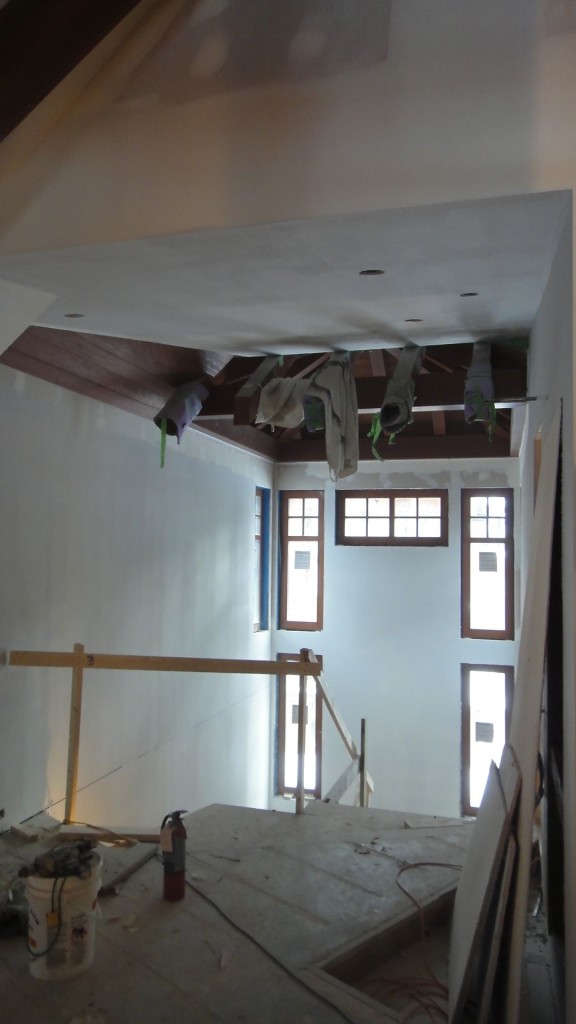
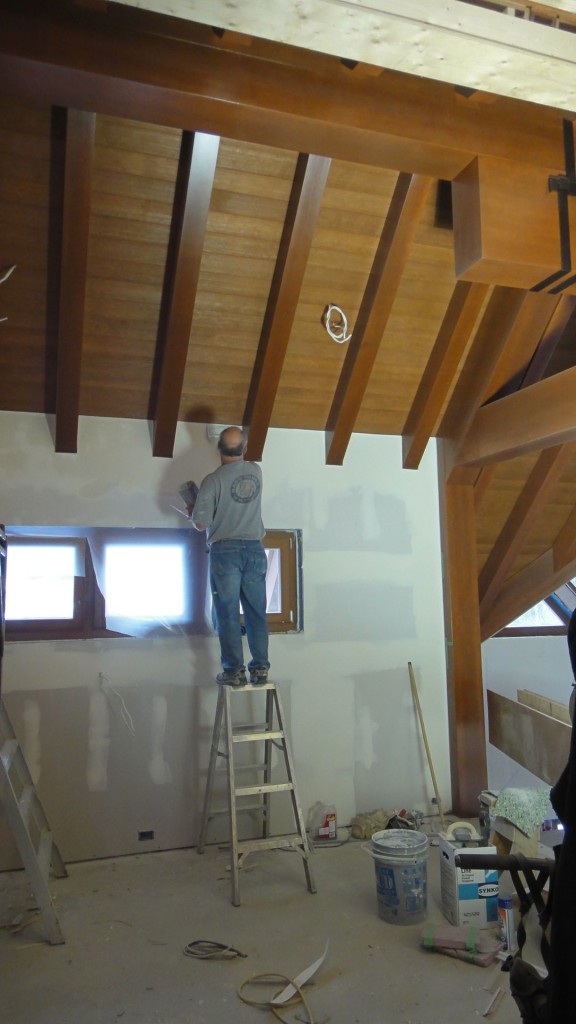
Details are critical with a masterful build like this one, where everyone’s brought their A++ game. Here’s Kelvin getting all those reveals smooth and level. It’s looking great, and we know he’ll keep it up.
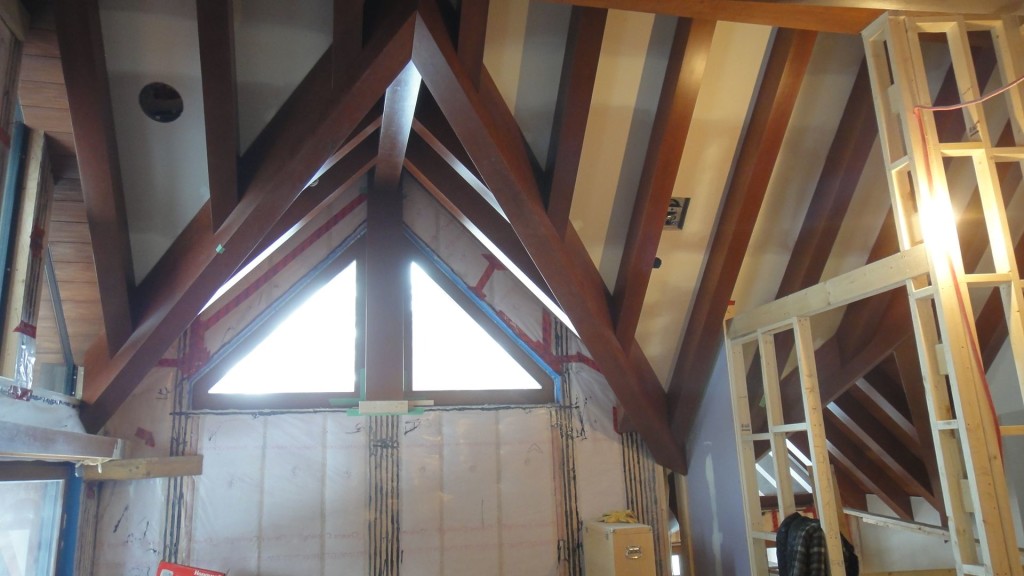
The beams in the master bathroom are installed now, getting closer to a  finished look.
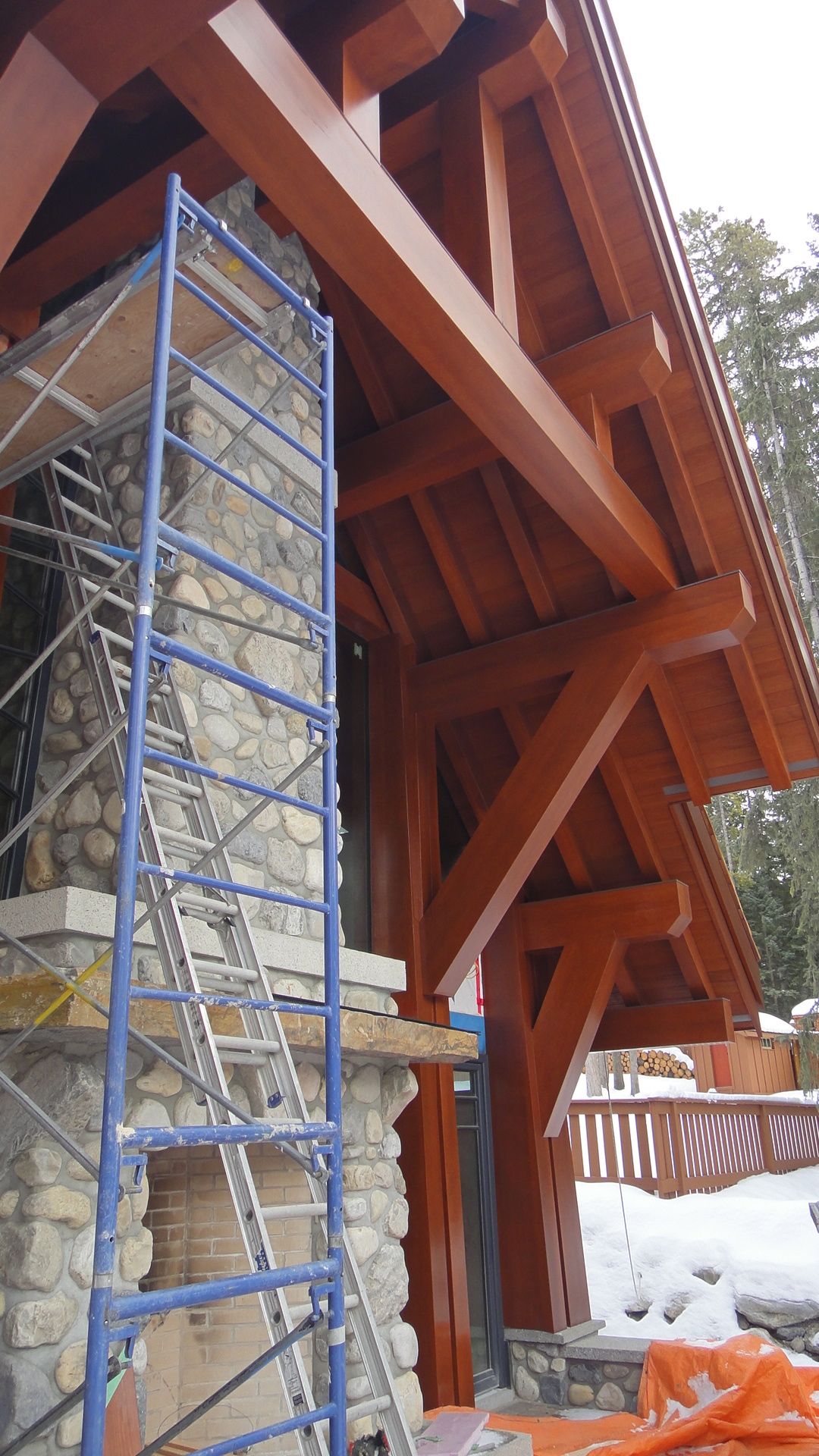
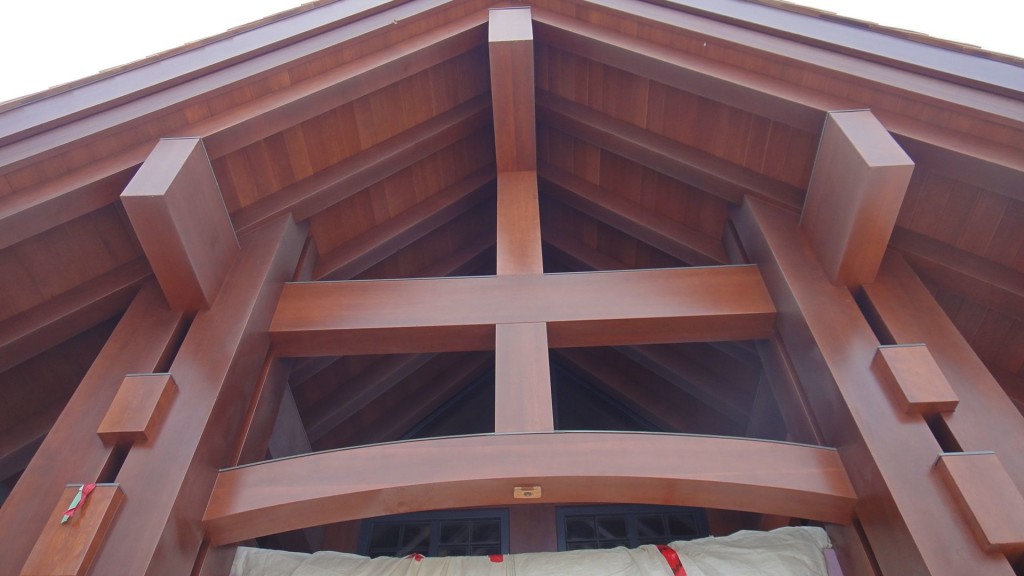
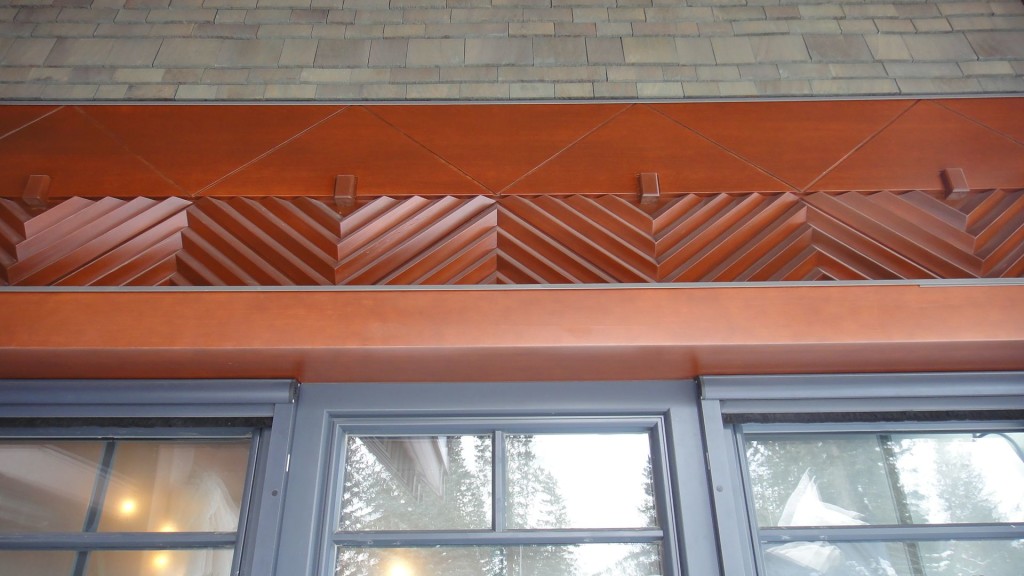
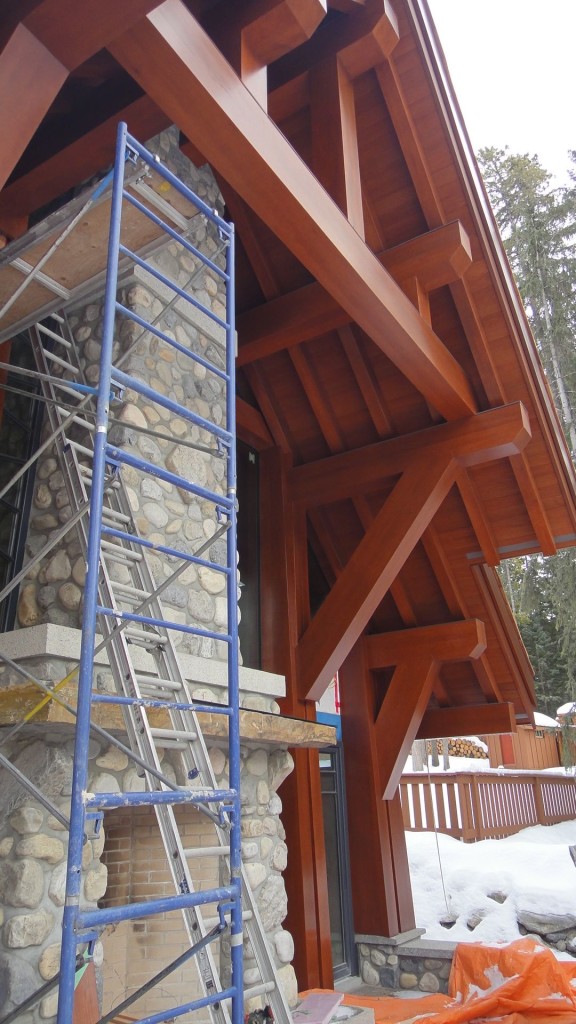
The outside of this place is getting just as much detail work as in the inside. Here are some shots of the exterior. Now this is some serious craftsmanship going on here.
Here’s one of my favourite areas of the whole build: the back patio, with its massive fireplace.

Can you imagine summer nights, friends, wine, a fire crackling, and those towering evergreens all around?
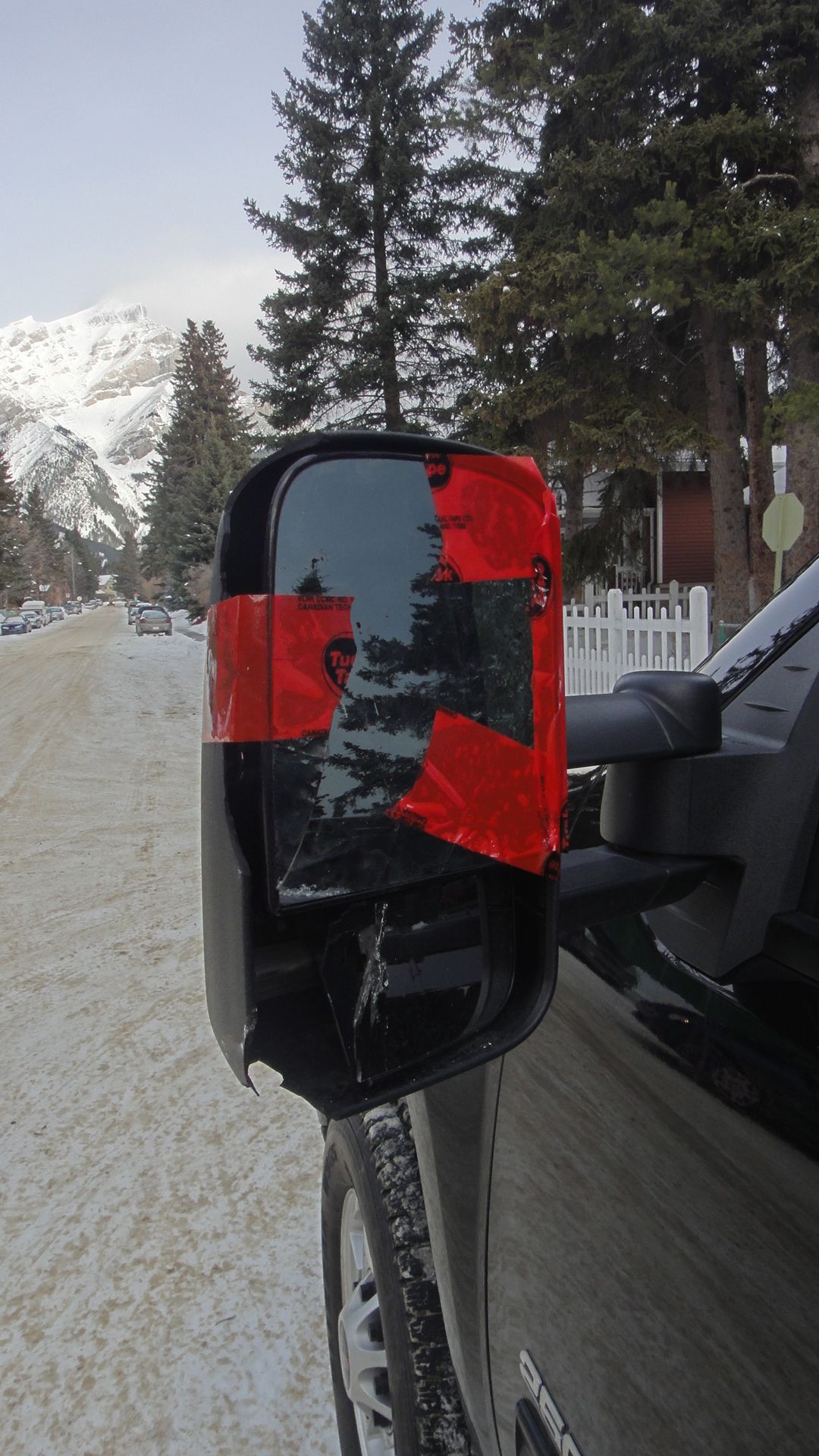
All work and no play makes Darrell and the boys unhappy. I’m no dummy, we can’t have that! No trip, not even a work one, to Banff, Alberta, is complete without hitting the local slopes. Here’s us, off to Sunshine Village for a little powder action.

Sometimes accidents happen… Would you believe a darn tree just jumped right out at me? :-)

Thanks for sticking around as my epic work adventure continues.

Stay tuned for more soon!

Cheers,
Darrell Morrison

[Post to Twitter]  [Post to Delicious]  [Post to Digg]  [Post to Facebook]  [Post to StumbleUpon] 

Italian Lime Plaster Interior In Banff, Alberta


November 12th, 2010

Early last Monday afternoon, I drove past a sign reading “Welcome to Banff, Alberta.”

Over the next three months, I’ll be working on an amazing, extremely customized home that backs onto Banff’s beautiful Bow River.

Along with everything else that blows me away about this house is the fact that I think it has the most stunning millwork I’ve ever encountered anywhere. Entering this amazing home felt like I’d just walked into some mind-blowing 5-star hotel in, well… Banff.

To add to the dramatic millwork and scenic setting, I’ll be using rich, deep earth-tone colours that complement the amazing nature all around us here in these legendary mountains. The plaster will be a 4-coat slightly-pitted Intonachino lime plaster finish.

The Canadian Rockies, where Banff is found, is known for its stone, exposed rockface, forests, and generally rugged terrain. I think this Italian lime plaster will really rock the Rockies, and it’ll be a commanding, dramatic feature in this impressive home as it stretches throughout the place, on all three levels.

I know this mountain town will be an amazing and inspiring place to work during the winter months. Come spring, if the owner converts the place into a “mountain stronghold,” it’ll be a beautiful place to hole up and easily forget about the rest of the world.

Banff is the highest town in Canada, sitting at an elevation of more than 4,500 feet (about 1,380 metres), nestled in the heart of the Canadian Rockies. It was declared Canada’s first national park in 1885, and today is a UNESCO World Heritage Site, with a protected area of more than 7,700 square miles.

The Bow River, which this home backs onto, originates from the Bow Glacier and Bow Lake. It flows for 587 kilometres, joins with the Oldman River to become the larger South Saskatchewan River, and eventually spills into Canada’s famous Hudson’s Bay, halfway across the country.

[Post to Twitter]  [Post to Delicious]  [Post to Digg]  [Post to Facebook]  [Post to StumbleUpon] 

Darrell Gets A New Toy


June 16th, 2010

Recently, I finally got the tool I’ve been wanting to add to my company’s arsenal — a 12-colour carousel tinting machine.

You’re likely saying “A what?”

When I Say “Any Colour”, I mean It More Than Ever

For years, I’ve been creating custom colours. Many times, I’ve been unsuccessful because of technicalities, like not having proper colours available to me or a way to distribute them evenly or quickly among all the products I needed to mix to get the job done and done well.

Stuck working with these technicalities, a lot of my colours were found in one part of the colour spectrum — browns or tans, and even beiges now and then.

With the size of new lime-plaster interior projects and the new direction I’d like to take my Venetian plaster work in, I knew the time was right to get this tool that would make the difference in meeting my standards on a large scale.

As an example, I’m currently working on a 10,000 square-foot Intonachino lime-plaster interior. With so much surface to cover, the client is having a hard time choosing the perfect colour. We’re close, so they now only want slight shifts in shade and/or hue. (How are “shade” and “hue” different? Learn more by following this link.)

Picky? Not at all. Like me, they know job satisfaction is all about the details.

I’ve now taken great care to create 20 different colours for this project. That’s a bit of an extreme for any project, maybe, but you have to live with the colour long after I’m gone, and we need to get it right. I won’t get upset or rush you for a colour at the beginning of a project, because preparation and work can begin while we take the time to do the right things to help you come to a decision you literally can live with.

This tint machine makes my life easier and helps me live up to my dedication to getting you a a truly livable colour for your environment. Now, at any point in time, I can change a colour’s direction. You want a 25% lighter shade? Okay, not a problem. We don’t need a paint-shop pro or a chemist to guess it out. Let’s get that done ourselves — between you and me, and save ourselves a lot of headache and reduce wasted materials in the process.

Breaking It Down:

◦                                  Whatever your favourite material – Tadelakt, Intonachino, Carrara or Classic — I have full control over the colour and tint of the end-product.

◦                                  Your money gets saved because I’m not wasting materials or gambling on a factory’s ability to get those pallets of lime plaster tinted just the right way.

You want it lighter? Darker? I can change that on a dime now, so you get what you want when you want it. Hue by hue, shade by shade, we’ll nail the colour of your dreams.

[Post to Twitter]  [Post to Delicious]  [Post to Digg]  [Post to Facebook]  [Post to StumbleUpon] 

Italian Lime Plaster Interior


May 4th, 2010

The last few months, I’ve been working on a Tuscan lime plaster interior in a beautiful custom home tucked away in Burnaby.

I’ve gotta say, the architecture blows me away. It’s my first plaster project in the area, and the home definitely ranks in the top 5 fave homes I’ve worked on. With curved walls, dominant archways, stunning distressed-wood doors, what didn’t I love?

I was brought in to install a 4,000 square-foot Venetian Plaster effect. I’m nearing the 70% completion mark. Things will move along really quickly in the next few weeks, though.

Here’s a breakdown of what’s going on.

The materials of choice this time are Stucco Italiano and Intonachino lime plaster.

I choose to seal my Venetian plaster projects with penetrating sealer. This helps to repel moisture and oil. If you’re getting a great finish, shouldn’t it be protected for you to enjoy for decades? Yeah, I think so too.

Once the sealer dries, I’ll go over it with golden heavy-bodied glaze tinted to a light raw umber.

If I don’t do this overglazing step, the Tuscan plaster style looks too new and fresh — like the photo on the top left shows.

While I believe in sealing all my plaster, it’s really necessary if glazing Tuscan lime plaster. Why? It’s thirsty like you wouldn’t believe. If it’s not sealed before glazing, a catastrophe can happen. The raw umber glaze would stain the surface beyond repair — blotchy and horrible. The wall would need redoing from start to finish, and who wants that? I’ll get it right the first time.

This is also where being super-prepared before getting started means everything. If that glaze hits an unsealed wall next to the project, it could be a domino effect of colour catastrophes, so care always needs to be taken.

Check out these snapshots of some of last week’s great work. Catch you next time.

[Post to Twitter]  [Post to Delicious]  [Post to Digg]  [Post to Facebook]  [Post to StumbleUpon] 

Distressed Lime Plaster Entryway White Rock, British Columbia


March 29th, 2010

In this renovation, the homeowner knew exactly what he wanted: A great living space with a lot of detail.

I’m not kidding, he left no corner out. Now that’s my kind of attention to detail!

I was commissioned to turn this doorway from “BLAH!” to “WOW!”

To do that, I chose to use Intonachino. I kicked it off with tinting the materials to a light orange/tan, using three colours to mix it from scratch: Raw Sienna, Red Oxide and Raw Umber (but the links are not the actual brands of the materials I use to tint my plaster; just great information pages for you to check out).

After, the finish was left to sit and cure for a few days before I returned to apply the all-important penetrating sealant before doing a beautiful raw umber glaze.

What do you think about this kind of finish?


[Post to Twitter]  [Post to Delicious]  [Post to Digg]  [Post to Facebook]  [Post to StumbleUpon] 

Next Page »